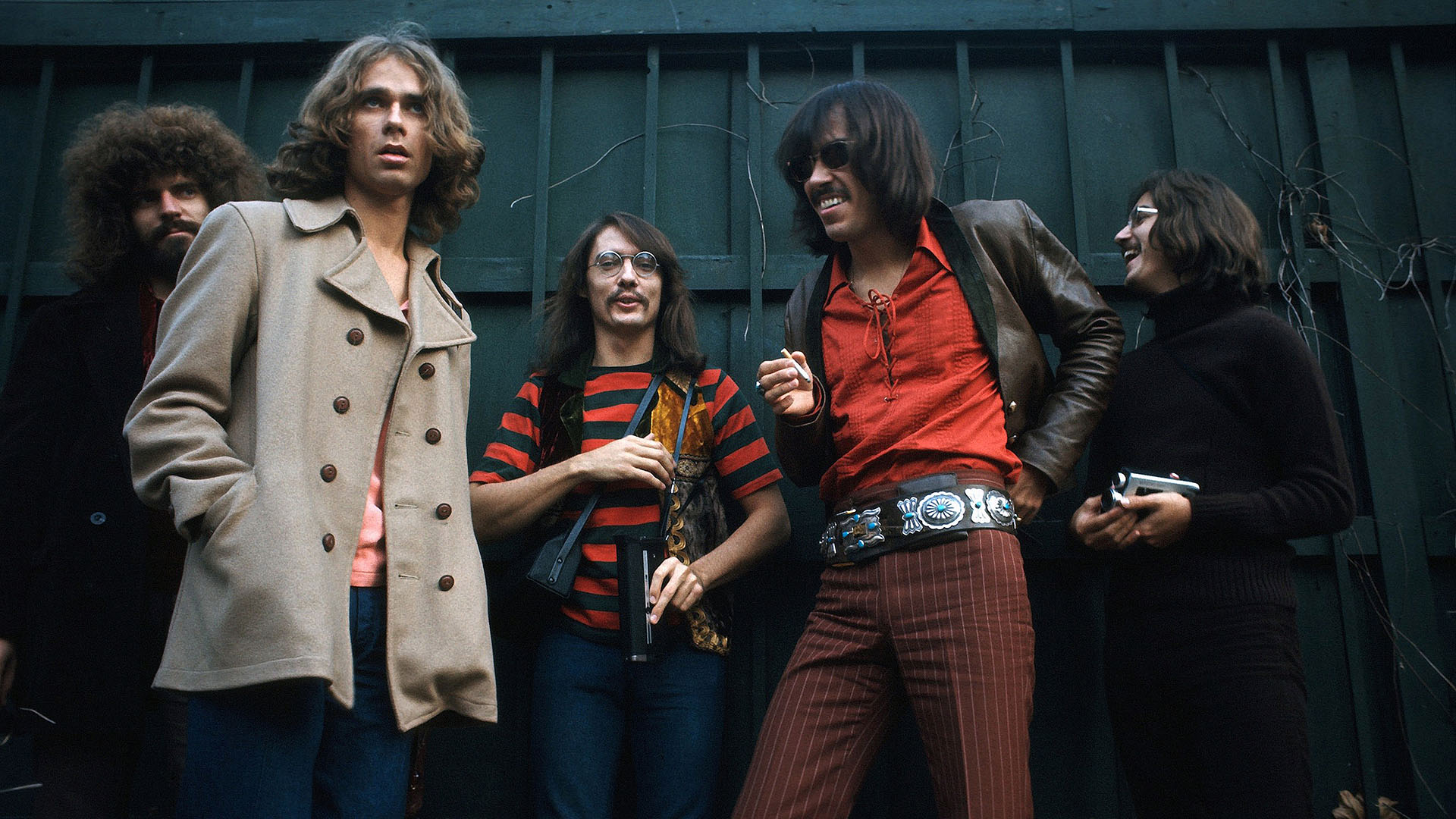
Born to Be Wild: The Story of Steppenwolf
The mission of the Centre d'art et essai de la Cinémathèque québécoise (CAECQ) is to primary program Quebec-made documentaries and independent fiction, as well as international documentaries, animated and foreign films, while encouraging opportunities for meetings between the public and the artists. Its programming is presented in conjunction with the Cinémathèque québécoise’s under the label New releases.
Follow the evolution of hard rock icons and pioneers Steppenwolf. The untold story of a band that defined a generation.

Oliver Schwehm
Oliver Schwehm is a German filmmaker. He studied German and Romance languages, literature, and studied further with a degree in documentary film at the University of Strasbourg. He knows how to track down hidden stories and process them through meticulous research, such as in Cinema Perverso (2015), in which he resurrects the lost world of German railway station cinemas. His works are always characterised by a high proportion of unknown archive material, as well as access to special protagonists who tell the story "first hand". For Born to be Wild (2024), he managed to track down the legendary songwriter Mars Bonfire, who once wrote the song of the same name, was considered lost for decades, and was finally found by Schwehm in the Nevada desert. He also told the forgotten story of the German film producer and magician Helmut Schreiber, who made a career as a producer under National Socialism and then became the most famous magician of the post-war period, making it onto the Ed Sullivan Show. Schwehm's films repeatedly serve as a template for fictional adaptations. His film Milli Vanilli - From Fame to Shame (2015) provided the inspiration for Simon Verhoeven's musical biopic Girl You Know It’s True (2023), and an adaptation of Fly Rocket Fly (2018) is also in the works.
Bio & photo: Rezolution Pictures