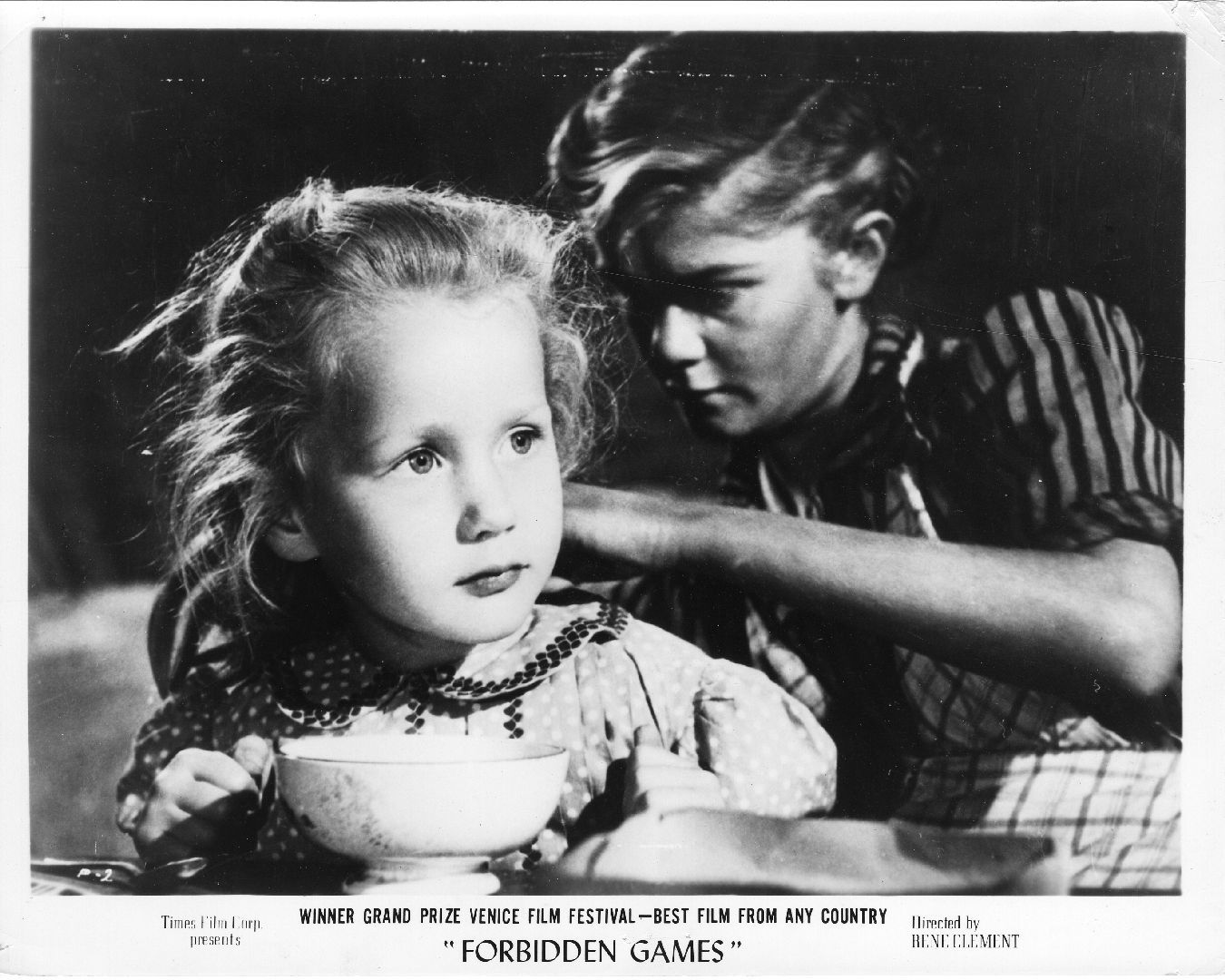
Forbidden Games
Since the beginnings of the Septième art, French pioneers have left their marks, weaving a privileged bond between the history of this medium and the cinematography of their country, that has never been denied over the decades. This recurring cycle aims to remind to film lovers, some of the treasures of this heritage, sometimes preserved in the collections of the Cinémathèque.
Winner of the Golden Lion, 1952 Venice International Film Festival
Winner of the Academy Award for Best Foreign Language Film in 1953
Preserved in our collections
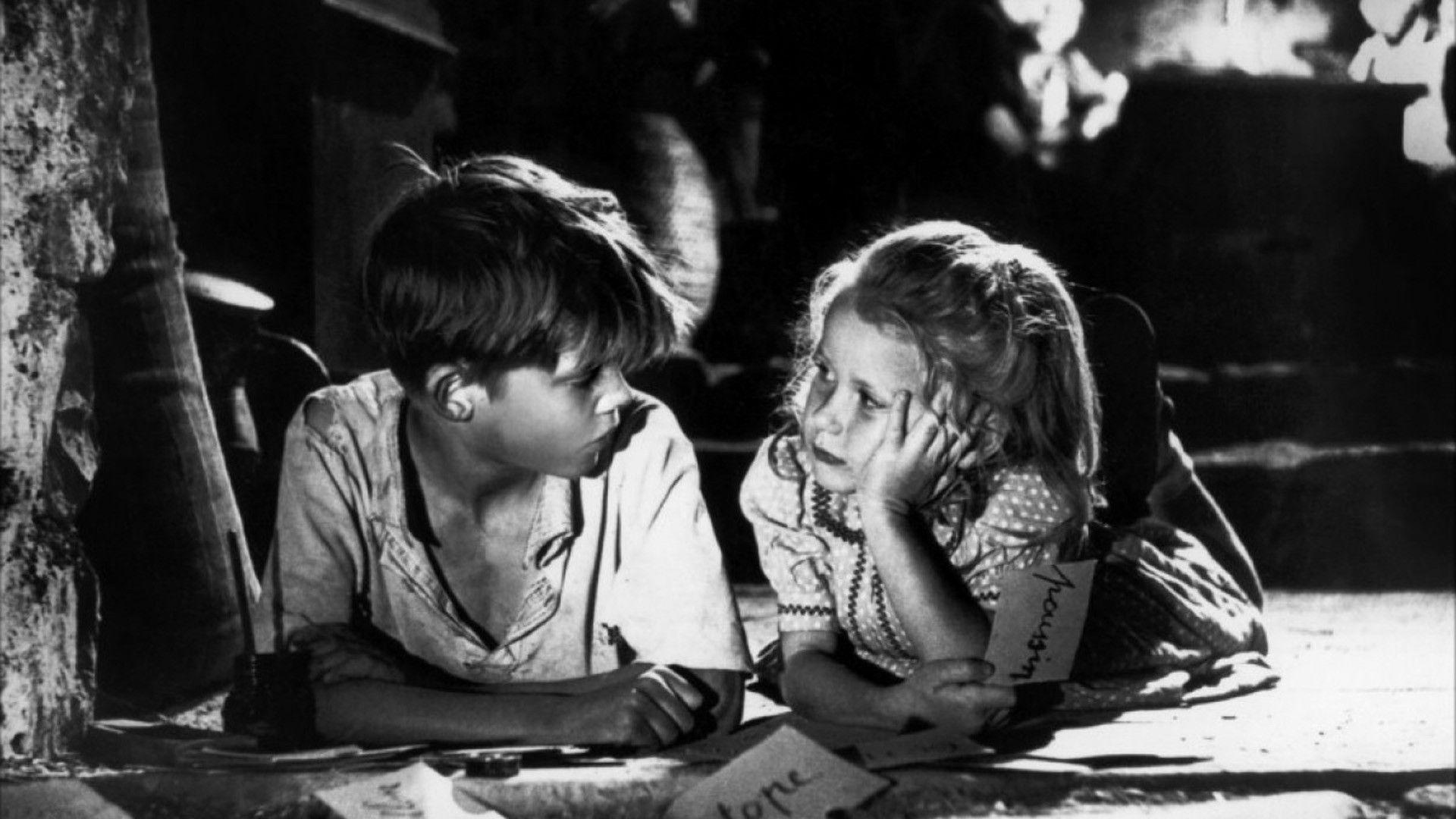
In June 1940, a 5-year-old orphan girl is taken in by farmers and falls in love with their 11-year-old son.
René Clément
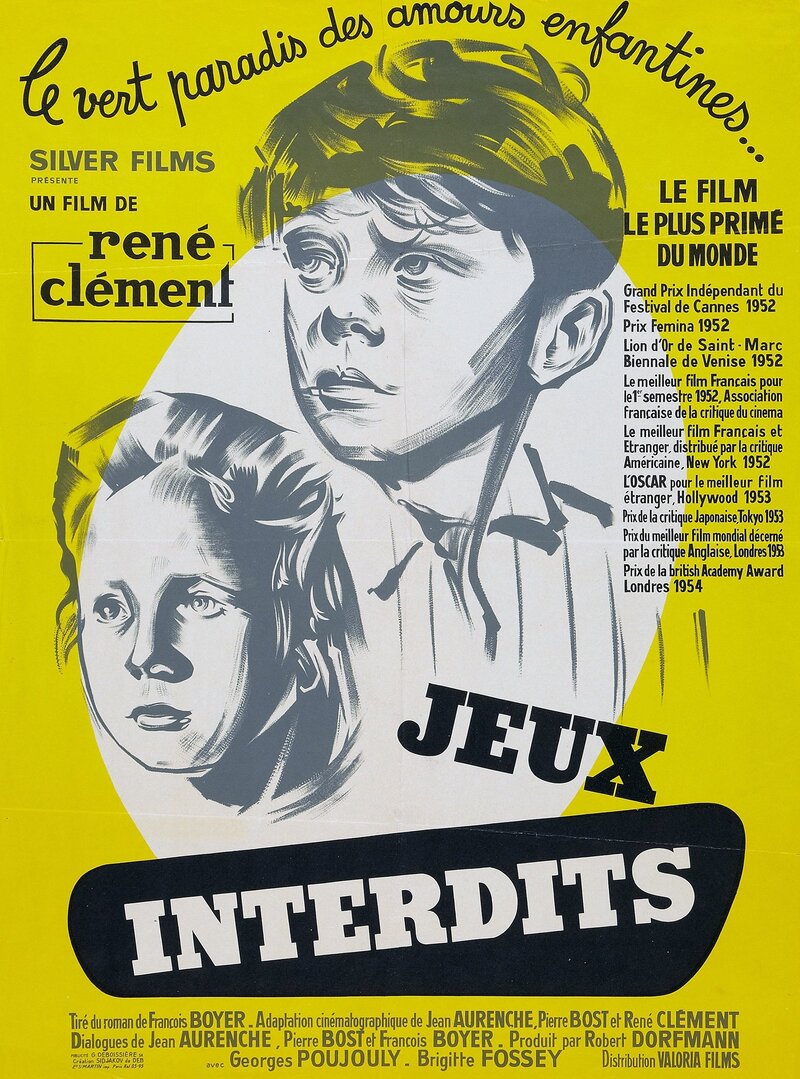
René Clément is the only French director to have won the Academy Award for Best Foreign Language Film twice, for The Walls of Malapaga (1951) and Forbidden Games (1953). He directed his first film, César chez les Gaulois, an animated short, in 1931. In 1934, he met Jacques Tati and began working with him, including on his first short film, the light-hearted comedy Soigne ton gauche (1936). In 1937, he traveled with archaeologist Jules Barthoux to Yemen to shoot a documentary. During World War II, he continued focusing on documentaries, and his short film Ceux du rail (1943) caught the attention of the French film cooperative, which chose him to direct La bataille du rail (1946). This would become his first feature film and a major success, earning him the Jury Prize at the 1946 Cannes Film Festival. Clément soon became one of the most prominent French filmmakers of the post-war era. Six years later, his greatest success, Forbidden Games (1952), won the Golden Lion in Venice and the Academy Award. His reputation grew in the United States, where he worked with stars such as Jane Fonda for Joy House (1964), Charles Bronson for Rider on the Rain (1969), and Faye Dunaway for The Deadly Trap (1971). Clément remains the most awarded French filmmaker to date at the Cannes Film Festival, having received five prizes between 1946 and 1954.