The Hawks and the Sparrows
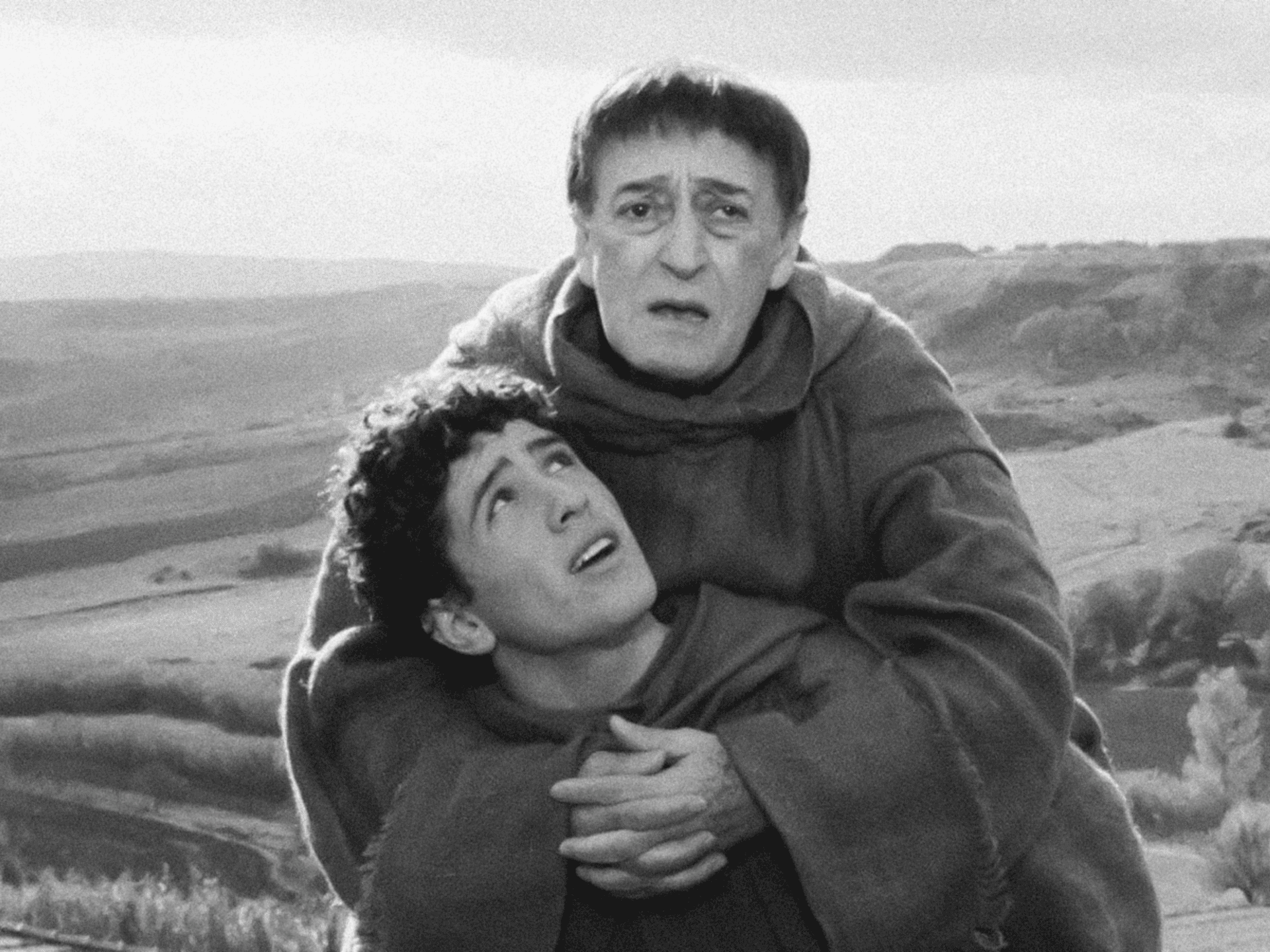
Featured in conjunction with Easter celebrations, this program brings together three cinematic incarnations of Saint Francis of Assisi: Franco Zeffirelli portrays the revelations and rebellions of his youth, Roberto Rossellini crafts an ode to his simplicity and fraternity, and Pier Paolo Pasolini follows in his footsteps, summoning him to shape a political parable. These are just some of the fables where poetry awaits at a bend in the path, and wisdom is whispered by the birds. Our warmest thanks to John Drendel for this proposal.
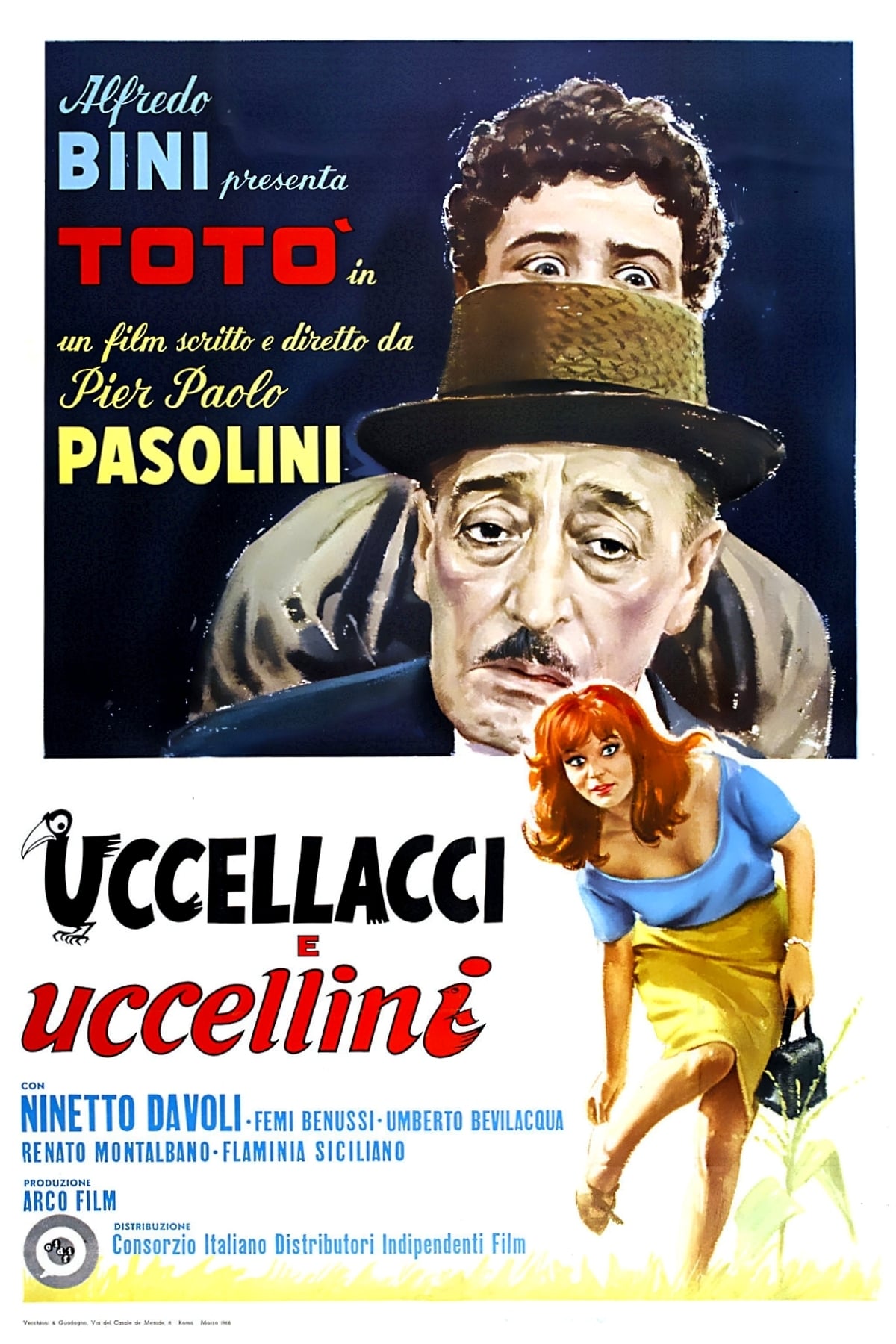
A talking crow tries to teach a father and son lessons about life. He tells them the true story of two monks who, sent by St. Francis of Assisi, tried to evangelize birds, both large and small.
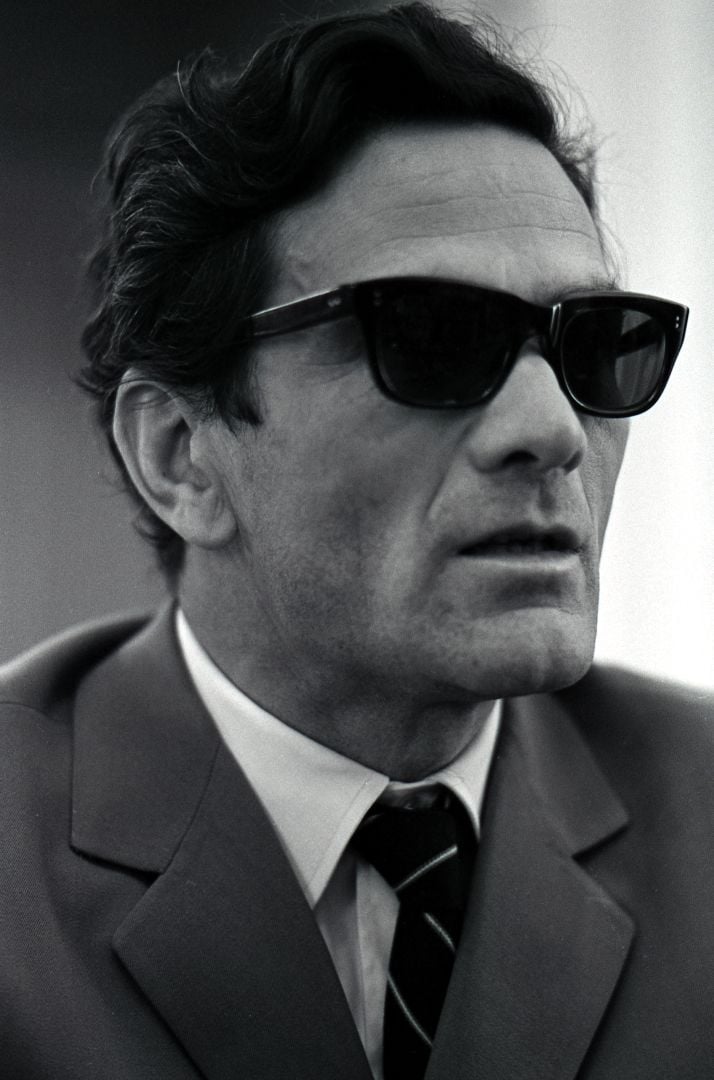
Pier Paolo Pasolini
Pier Paolo Pasolini was born in Bologna in 1922, the son of a military officer and a schoolteacher. During World War II, he began teaching, but was deeply affected by the death of his brother, a partisan fighter. In 1949, Pasolini was accused of corrupting minors and had to give up teaching. He was also expelled from the Communist Party due to his homosexuality, although this didn't deter him from his Marxist beliefs. He moved to Rome, where his early writings stirred both controversy and acclaim. Pasolini then turned to cinema, initially writing scripts for others before directing his own films in the early 1960s. His filmography grew increasingly hard to categorize, blending political and mystical themes. He was a relentless critic of fascism, bourgeois conformity, consumerism, and globalization. Frequently at odds with his era, Pasolini's career was marked by trials, controversies, and censorship, culminating in 1975 with the release of his most infamous and provocative film, Salò, shortly before his mysterious assassination.
Photo : Bruno Massenet | Collections de la Cinémathèque québécoise
Explore
Presented in collaboration with