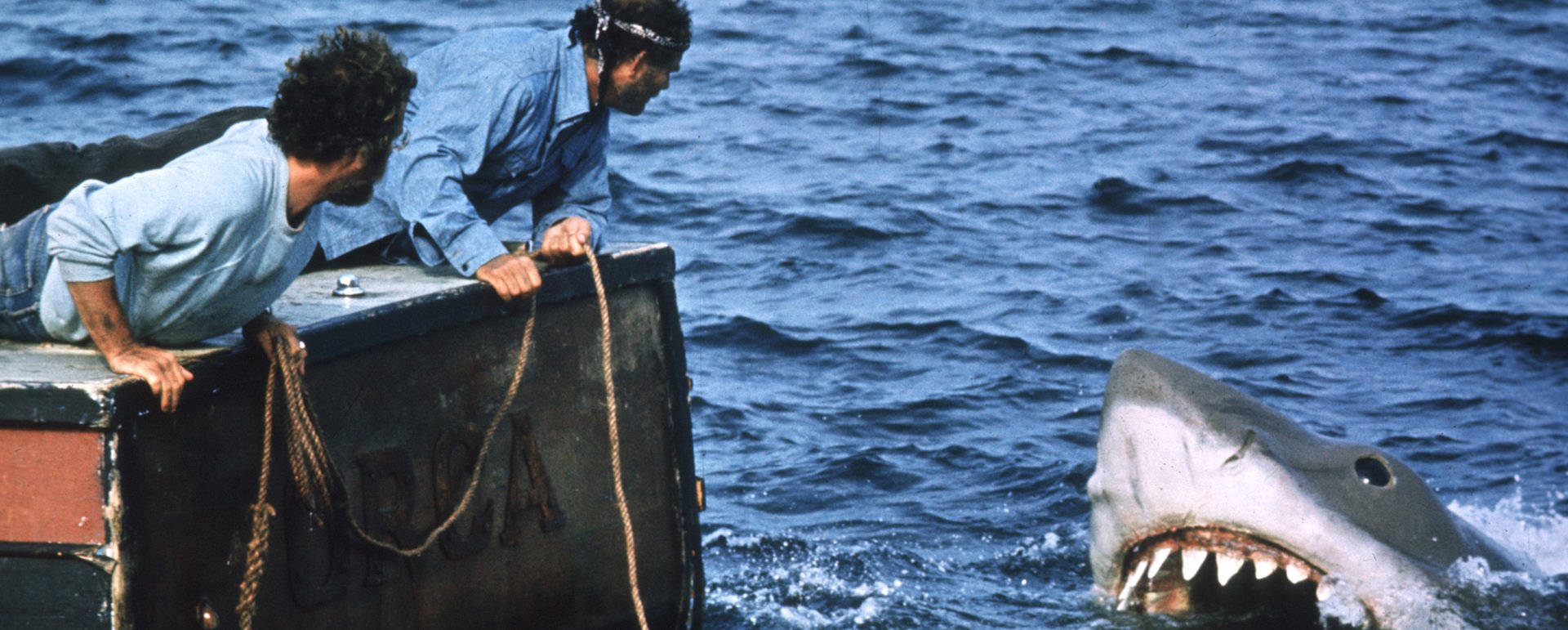
It is impossible to dedicate a cycle to science fiction without including Steven Spielberg & Georges Lucas, these two pivotal figures of SF in cinema. Alongside their iconic films (E.T., Star Wars), it seems instructive to showcase all the films they made leading up to their historic collaboration, Raiders of the Lost Ark, which explicitly references Fritz Lang's The Indian Tomb.
Winner of three Academy Awards in 1976
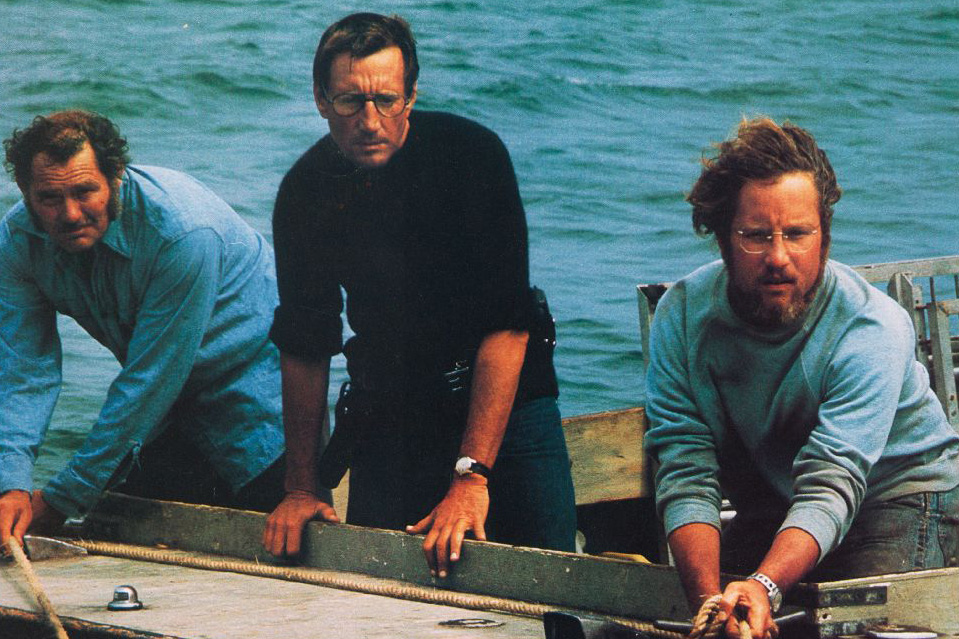
A huge, aggressive shark terrorizes a small New England seaside town. The local sheriff, a fisherman and a scientist try to stop the carnage.
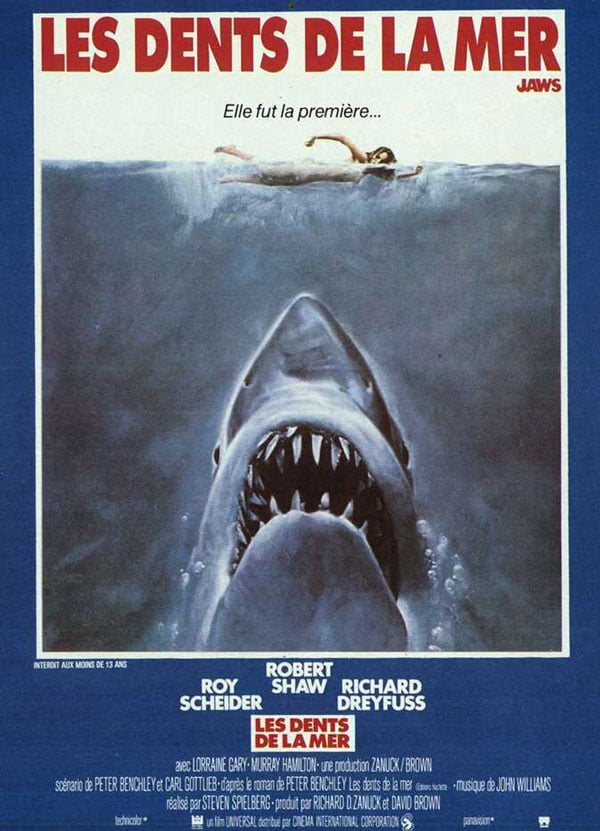
Steven Spielberg
Steven Spielberg is an American director, producer, and screenwriter. A member of the New Hollywood generation of the 1970s, he began his career by directing episodes of television series and minor feature films for Universal Pictures. He gained public recognition with the TV movie Duel, which was a huge critical success and led him to direct the blockbuster Jaws (1975). The film's critical and commercial success launched his career. He continued to achieve both national and international successes with the science fiction films Close Encounters of the Third Kind (1977) and E.T. the Extra-Terrestrial (1982). In the 1980s, in collaboration with his friend George Lucas, he directed the first three installments of the fantasy adventure saga Indiana Jones (1981, 1984, 1989) before trying his hand at historical drama with The Color Purple (1985) and Empire of the Sun (1987). He achieved great acclaim in 1993 with Jurassic Park, his biggest commercial success, and Schindler's List, for which he won the Academy Awards for Best Picture and Best Director. He continued in the 2000s with more science fiction works and several historical epics. Spielberg is the highest-grossing filmmaker of all time, with his films having grossed over 10 billion US dollars.

Explore
Sur notre blogue
Horreur - L'envers de la carte postale
Avec le boom économique d’après-guerre, l’Occident voit émerger de nouvelles habitudes de vie, sur fond de société de consommation. Une nouvelle image du bonheur, centrée sur le confort individuel, se dessine sur les publicités pimpantes. Le cinéma d’horreur va, dès lors, se faire un plaisir de la pervertir...
.jpg)