Leçons de cinéma de Godard à Montréal, programme 1
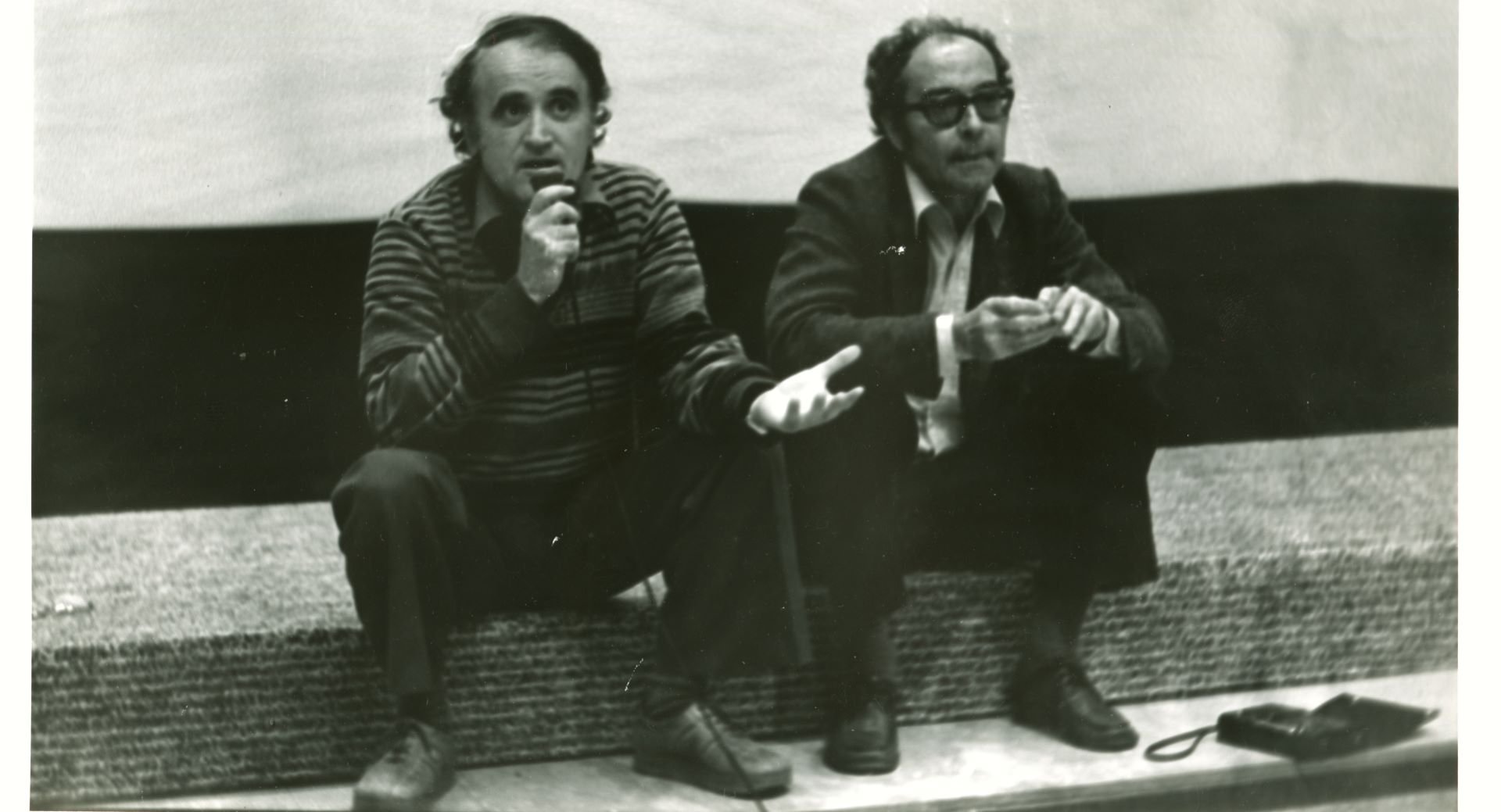
In 1978, Jean-Luc Godard was invited by Serge Losique at Concordia University to teach a course about the history of cinema. This was a crucial moment in the Franco-Swiss filmmaker's career, when, after much experimentation, he was about to return, in his own way and in appearance, to a more traditional form of cinema.
Lesson of April 14, 1978 (class #1)
Films discussed: Fallen Angel (Otto Preminger, 1945), Breathless (Jean-Luc Godard, 1958)
In the vaults of Concordia University's Visual Collections Repository department slept some 30 ½-inch black-and-white video open reels. They contained Jean-Luc Godard's 14 lessons, spread out from April 14, 1978 to October 21, 1978. The sessions consisted of long and brilliant series of digressions (often uninterrupted), initiated by questions from the audience or from Serge Losique. There are dazzling reflections on editing, economics, actors and actresses, war, political commitment, the media, and we witness the setting in motion of a unique thought. Filmgoers are invited to the Cinémathèque québécoise to attend the first Canadian presentation of three of these lessons.
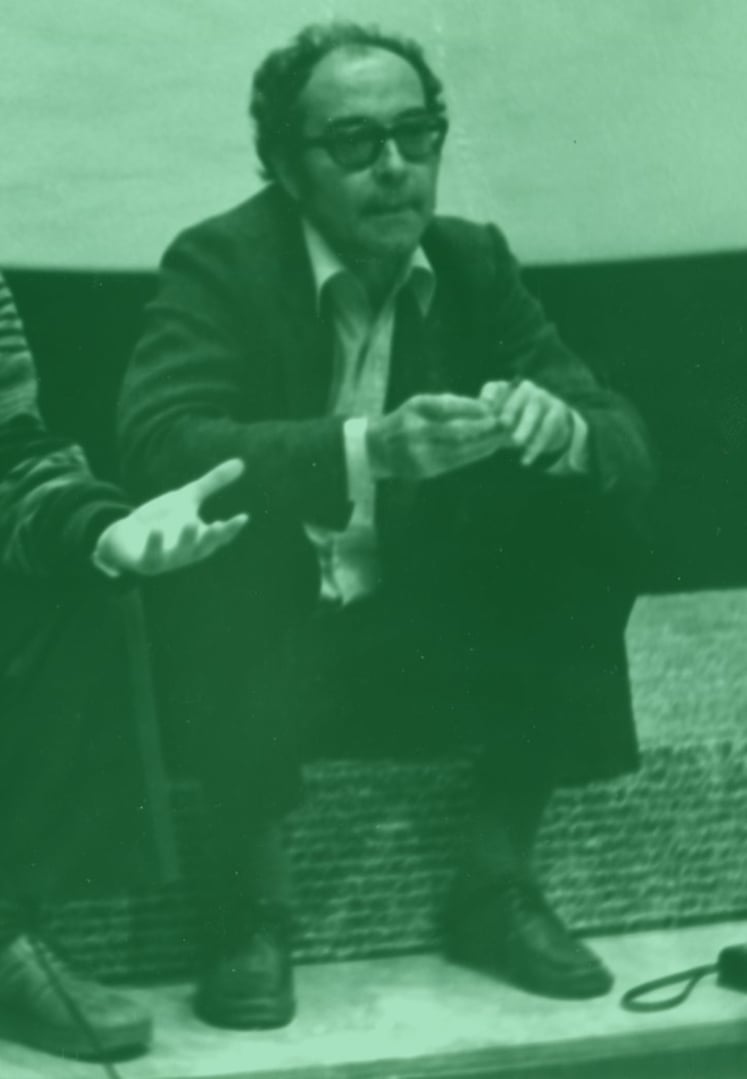
Jean-Luc Godard
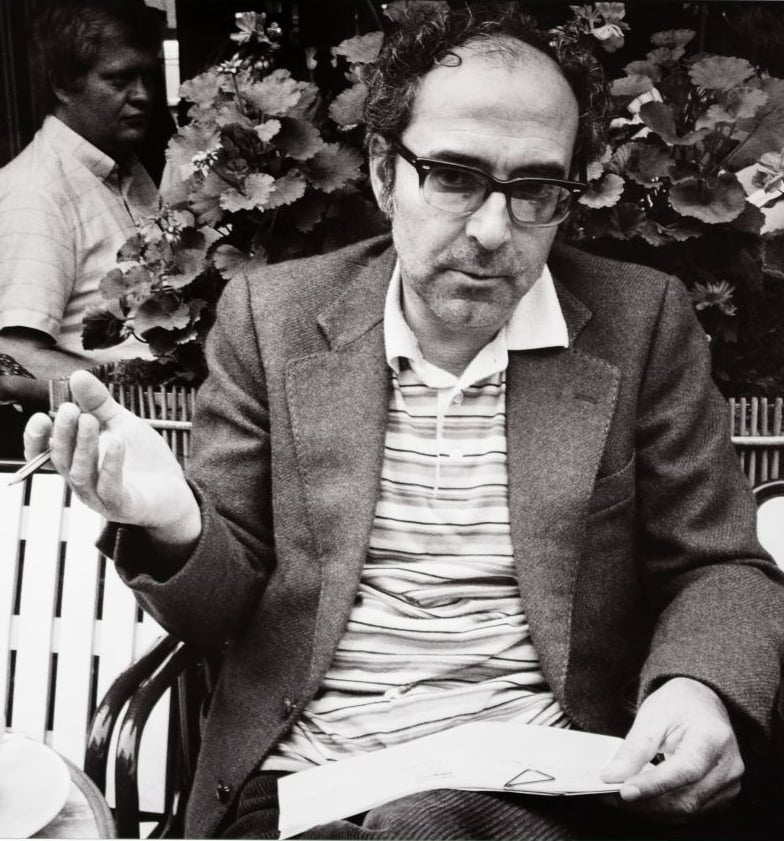
Born in Paris in 1930, Jean-Luc Godard grew up on the shores of Lake Geneva, initially developing a passion for painting. After the Second World War, which he spent in Switzerland, his family sent him to study in Paris, but Godard mainly attended film clubs and the Cinémathèque française. In the early 1950s, he became involved with the Ciné-club du Quartier Latin where he met Maurice Schérer (soon to be Éric Rohmer), François Truffaut, Claude Chabrol and Jacques Rivette, among others, with whom he took his first steps as a critic and embarked on the adventure of the Cahiers du cinéma. After directing a few short films, he moved on to feature films in the wake of François Truffaut by directing Beathless (À bout de souffle) in 1960, a film that helped launch the French New Wave. He will not stop shooting until the 2010s, creating an exploratory body of work that has always pushed the boundaries of cinema.
Photo: ©Bertrand Carrière | Collections de la Cinémathèque québécoise
Explore
Presented in collaboration with