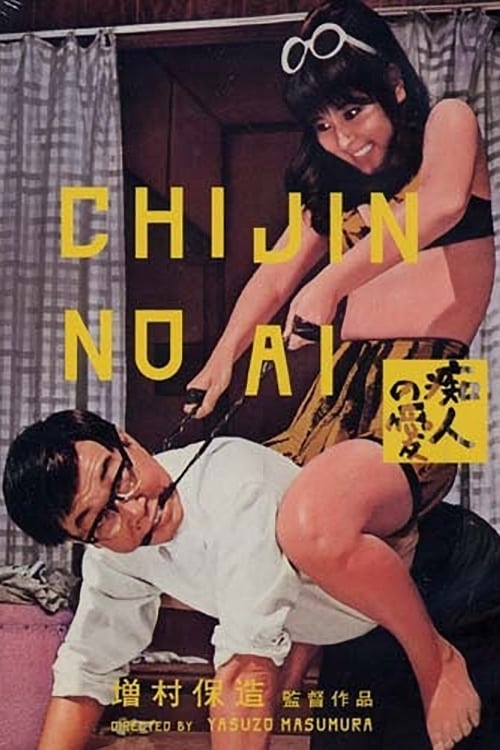
Love for an Idiot

Less known in the West than some of his peers, Yasuzō Masumura (1924-1986) stands as a significant post-war filmmaker and a leading voice in the Japanese New Wave. Despite his prolific studio work, he distinguished himself as an auteur with a style and themes that were both bold and precise. His films often focus on strong female characters, using seduction, sexuality, and the loss of innocence to reveal the underlying perverse or hypocritical power dynamics within society.
Please note that this 35mm print shows signs of wear, such as scratches and a slight red tint. Thank you for your comprehension.
An established and well-educated engineer becomes infatuated with a young teenage girl. Wishing to educate her, he marries her and supports her, but she soon turns him into her slave. A wild and ferocious farce, adapted from Jun'ichirō Tanizaki's first novel.
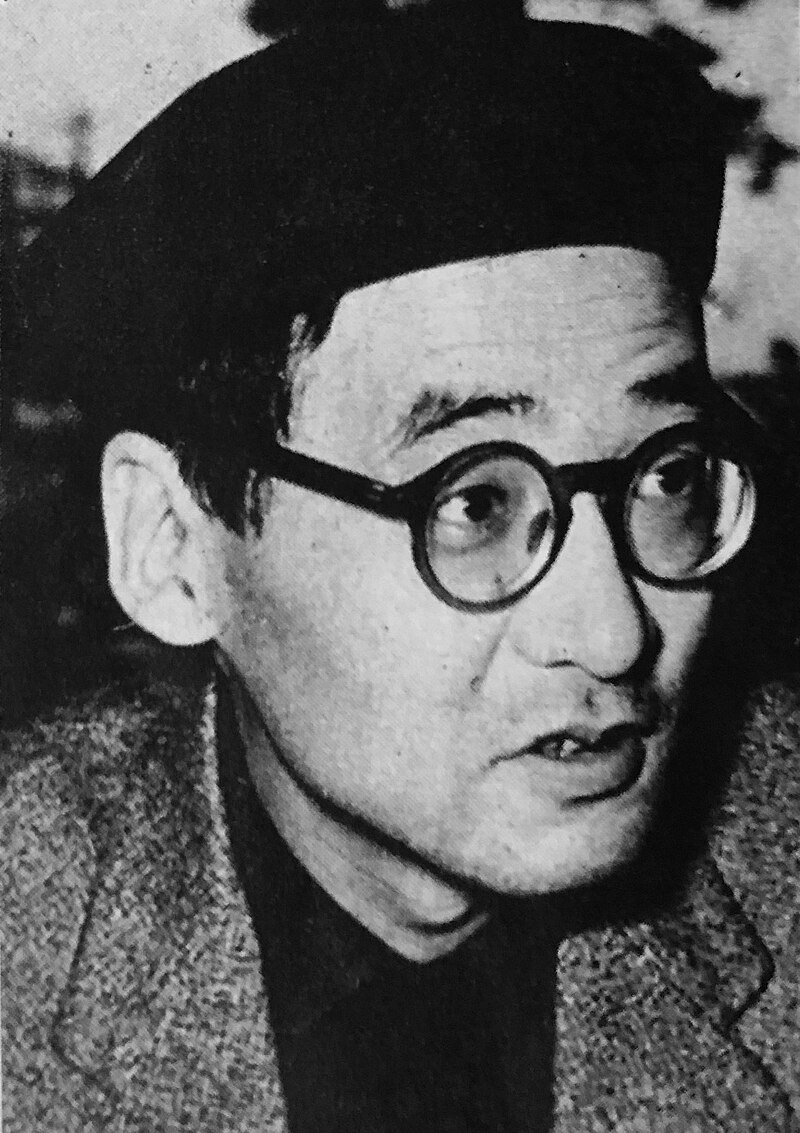
Yasuzō Masumura
Yasuzō Masumura was a Japanese film director from the Japanese New Wave. He was born in Kōfu, Yamanashi. After graduating from the law department at the University of Tokyo, he worked as an assistant director at the Daiei Film studio. He later returned to university to study philosophy and graduated in 1949. The following year, he won a scholarship allowing him to study film in Italy at the Centro Sperimentale di Cinematografia under Michelangelo Antonioni, Federico Fellini and Luchino Visconti. He returned to Japan in 1953. From 1955, he worked as a second-unit director on films directed by Kenji Mizoguchi, Kon Ichikawa and Daisuke Ito. In 1957, he directed his own first film Kisses. Until 1982, he directed 57 films, including his most famous : Red Angel (1966), Giant and Toys (1958), Blind Beast (1969), Seisaku's Wife (1965), The Hoodlum Soldier (1965) and Irezumi (1966).
Explore

Sur notre blogue
Yasuzō Masumura et ses anges redoutables
Précurseur de la «Nouvelle Vague japonaise», Masumura incarne l’esprit contestataire qui émerge à l’aube des années 1960 avec des films aux accents sulfureux, dénonçant aussi bien les travers du monde moderne que les principes étouffants de la société traditionnelle.