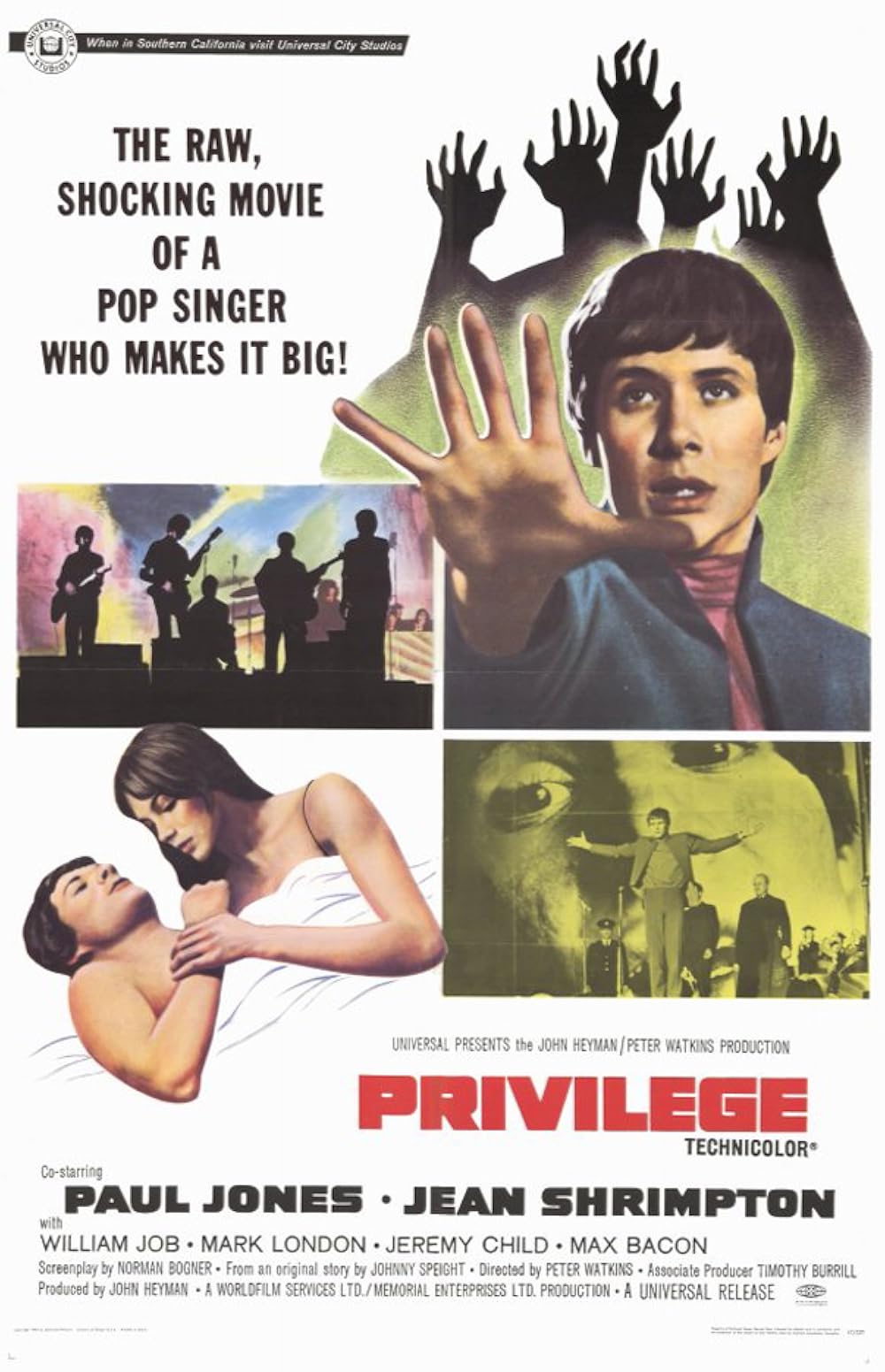
Privilege
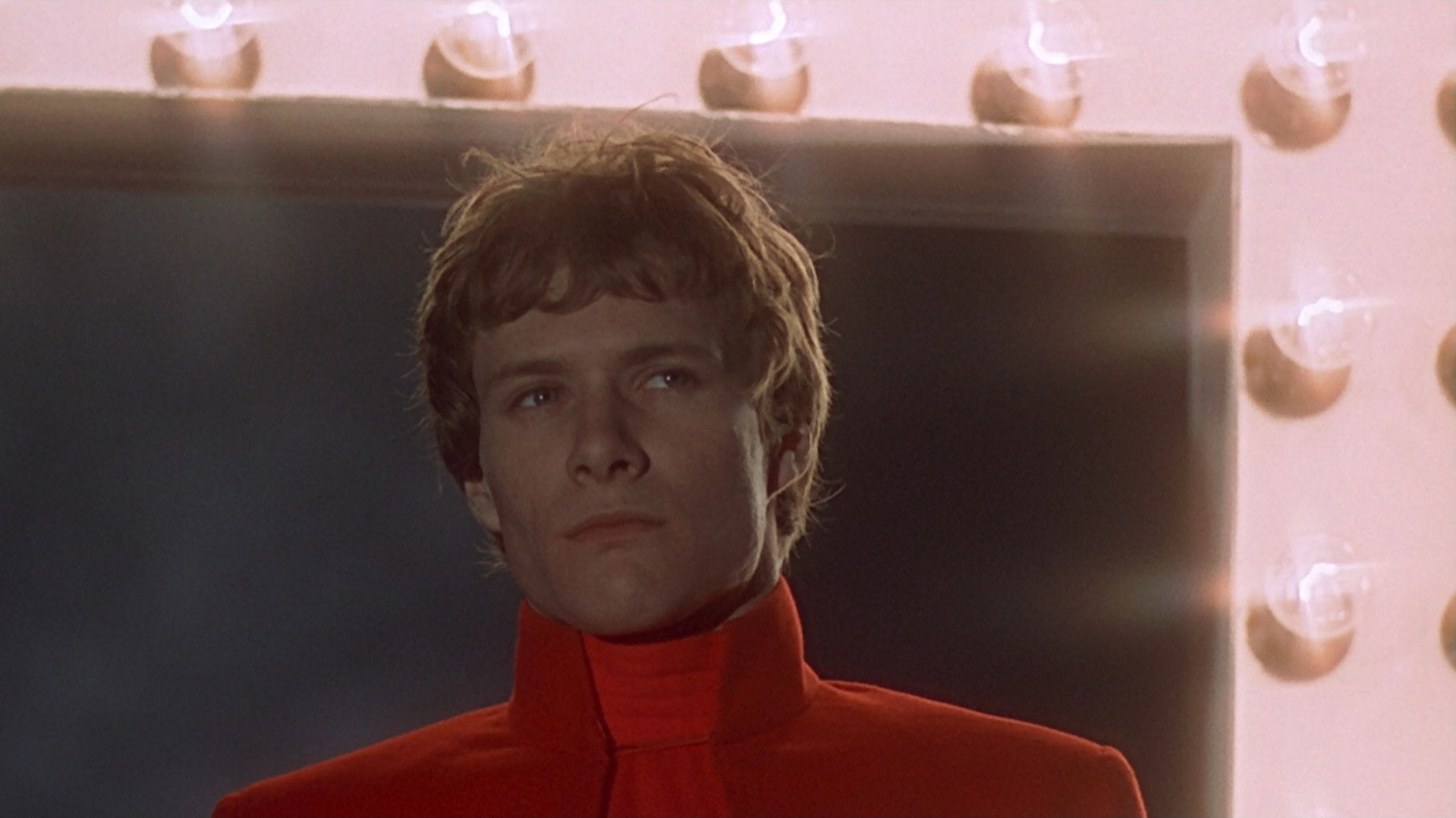
Peter Watkins’ early films aim to provoke, blending documentary techniques with fiction to unsettle the medium, while staging terrifying visions to challenge consciences and awaken critical minds. Following the filmmaker's passing a few months ago, this short program offers an opportunity to revisit the beginnings of his disruptive work, both in terms of its form and its commitment.
In a near future, Steven Shorter is the quintessential British pop star, adored by all. He begins to be used to manipulate the public's consumer choices. But it doesn't stop there...
Peter Watkins
Peter Watkins was an English filmmaker, documentarian, writer and film theorist. He is known as a pioneer of the docudrama and the mockumentary genres, typically with heavy political content. His films present pacifist and radical ideas in a nontraditional style. He mainly concentrated his works and ideas around the mass media and viewers' relation to and participation in a movie or television documentary. Nearly all of Watkins' films used a combination of dramatic and documentary elements to dissect historical occurrences or possible near future events. The first of these, Culloden (1964), portrayed the Jacobite uprising of 1745 in a documentary style, as if television reporters were interviewing the participants and accompanying them into battle. As another example, The War Game (1966) depicts the aftermath of a hypothetical nuclear attack on Great Britain. His reputation as a political provocateur was amplified by Punishment Park (1971), a story of violent political conflict in the United States that coincided with the Kent State Massacre. His other notable works included Edvard Munch (1974), a biographical film of the painter of the same name, and The Journey (1987), a 14-hour essay film about nuclear disarmament. The British Film Institute writes "in an age when the media stranglehold on both our lives and the means by which we communicate is ever tightening, [Watkins] films remain a vital tool for considering new forms of image-making and a vibrant and engaging force in their own right."
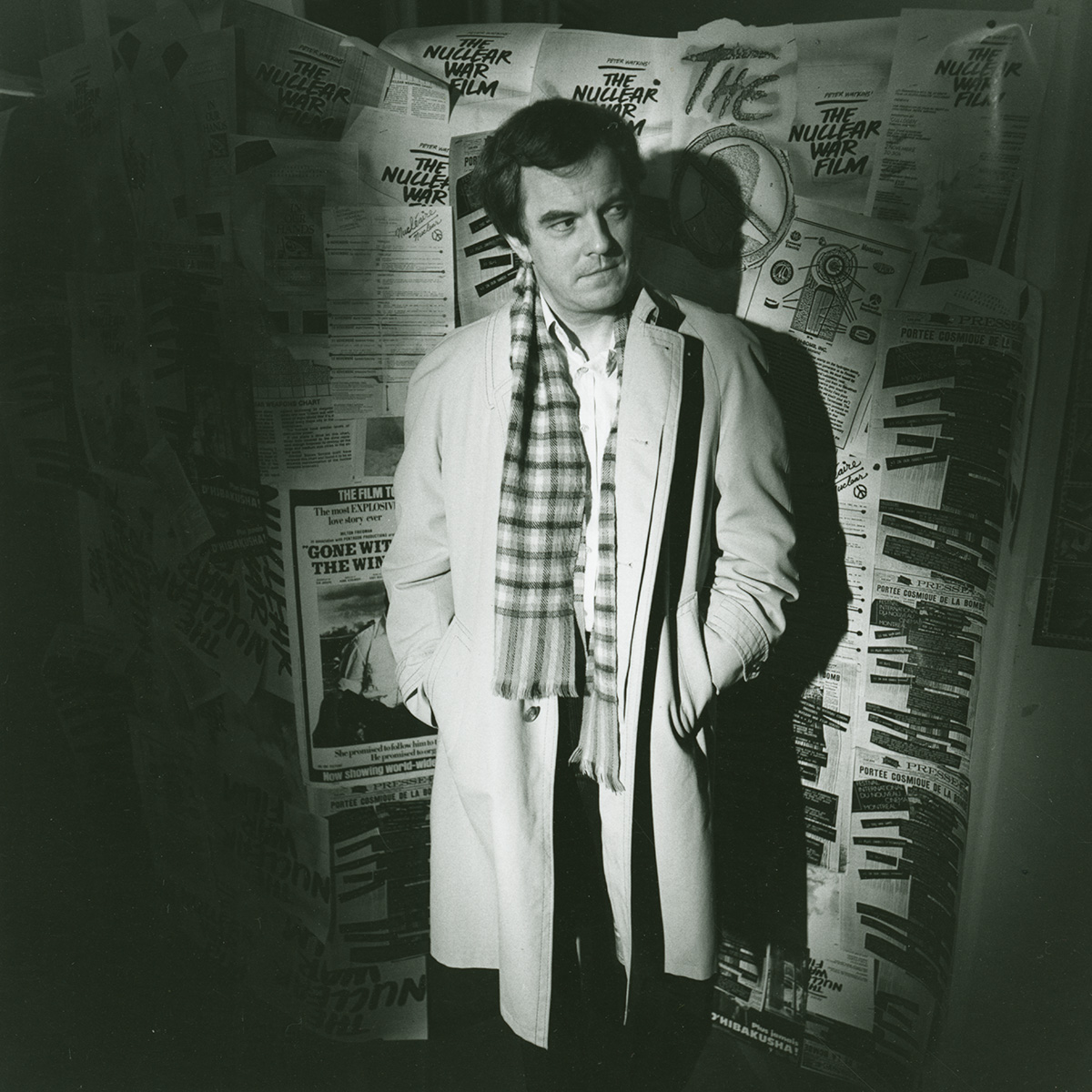
Photo: Jacques Dufresne | Collections de la Cinémathèque québécoise