See No Evil
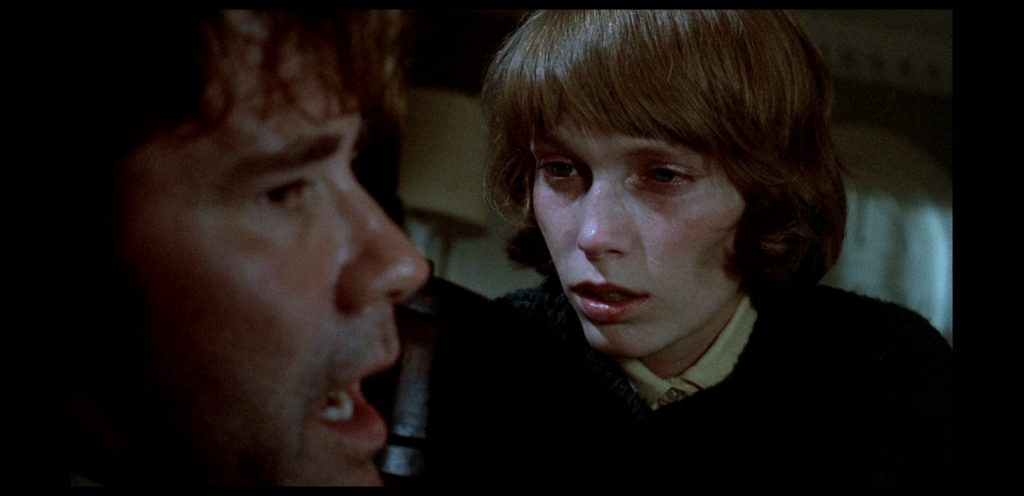
Cinema is a screen onto which we can project our fears, torments and the monstrosities of the world. The screen protects us from what we see, but cinema has also permanently anchored our nightmares around a few powerful images (empty houses, hostile attics and basements, demonic masks, bloodcurdling grimaces, disturbing postures). Throughout the summer, the Cinémathèque québécoise will be presenting a series of films encompassing more than one hundred and twenty years of horror, reminding us that what scares us most is to make the deepest of our fears tangible and credible.
After wiping out all the inhabitants of a farm, a mysterious assassin attempts to eliminate the only witness, a young blind gir
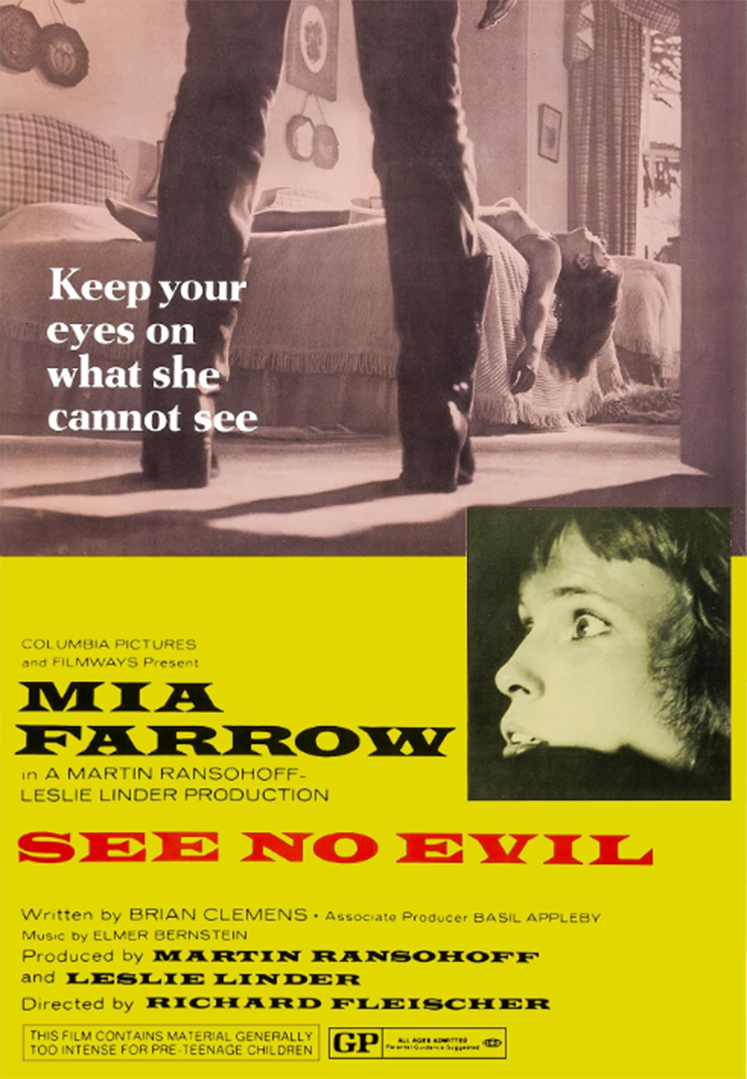
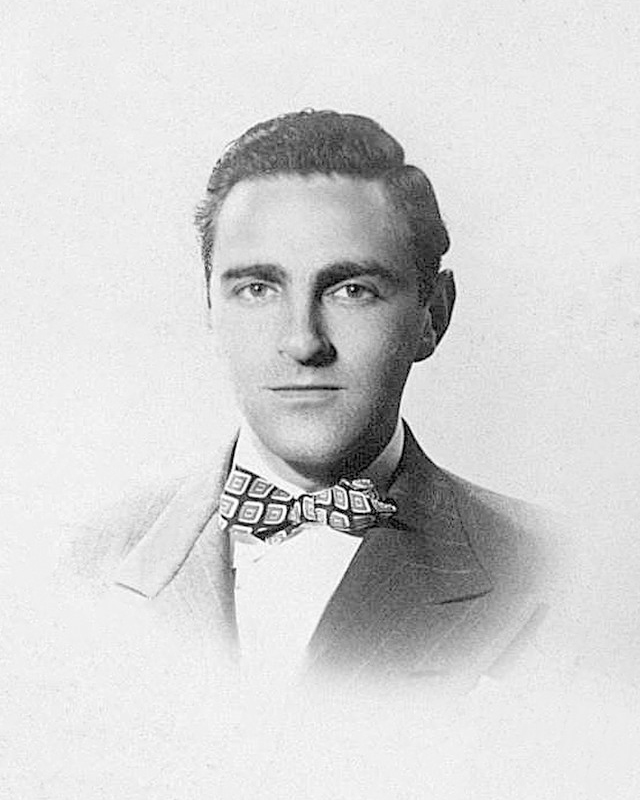
Richard Fleischer
Richard Fleischer was an American film director whose career spanned more than four decades, beginning at the height of the Golden Age of Hollywood and lasting through the American New Wave. Though he directed films across many genres and styles, he is best known for his big-budget, "tentpole" films, including: 20,000 Leagues Under the Sea (1954), The Vikings (1958), Barabbas (1961), Fantastic Voyage (1966), the musical film Doctor Dolittle (1967), the war epic Tora! Tora! Tora! (1970), the dystopian mystery-thriller Soylent Green (1973), the controversial period drama Mandingo (1975), and the Robert E. Howard sword-and-sorcery films Conan the Destroyer (1984) and Red Sonja (1985). Fleischer worked with many of the top Hollywood stars of his time, including Kirk Douglas, Robert Mitchum, Tony Curtis, Mia Farrow, Charlton Heston, and Lee Marvin. He was noted for his versatility, able to work in almost any genre under wildly varying conditions and budgets, making him a popular and prolific choice for producers. Many of his films proved very successful, being some of the highest-grossing features of their respective release years.