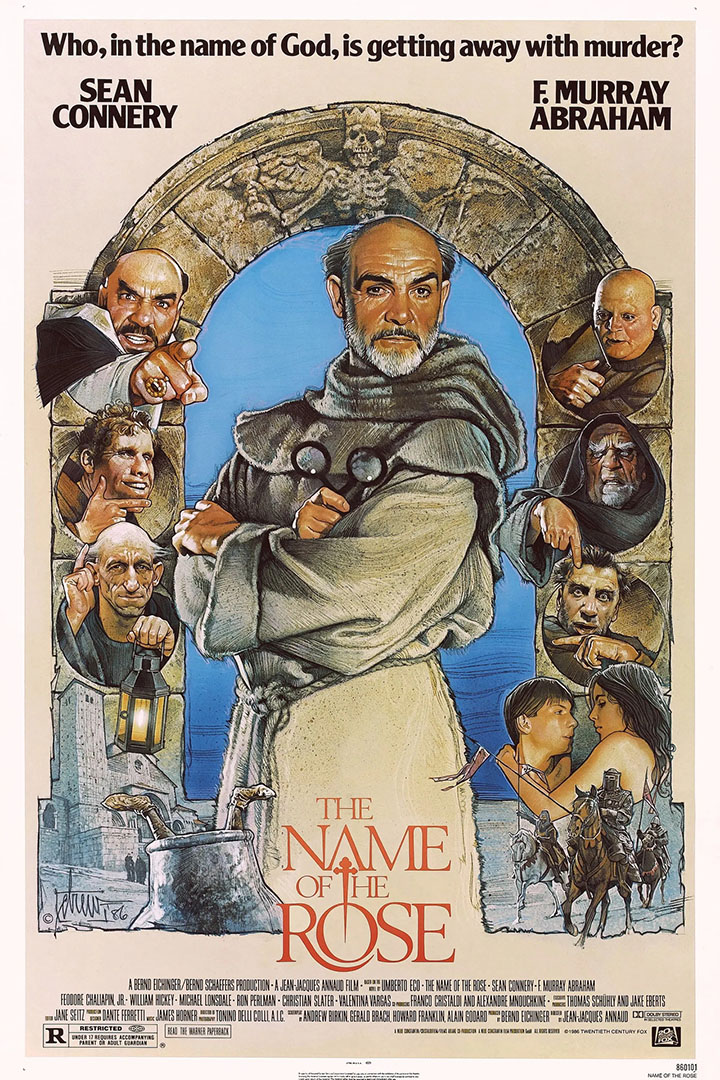
The Name of the Rose
Through films from Bresson, Annaud and Zeffirelli, this program explores how the medieval world has been represented through the lens of cinema. In doing so, we assess the resonance of that world in our own.
Winner of the César Award for Best Foreign Film in 1987
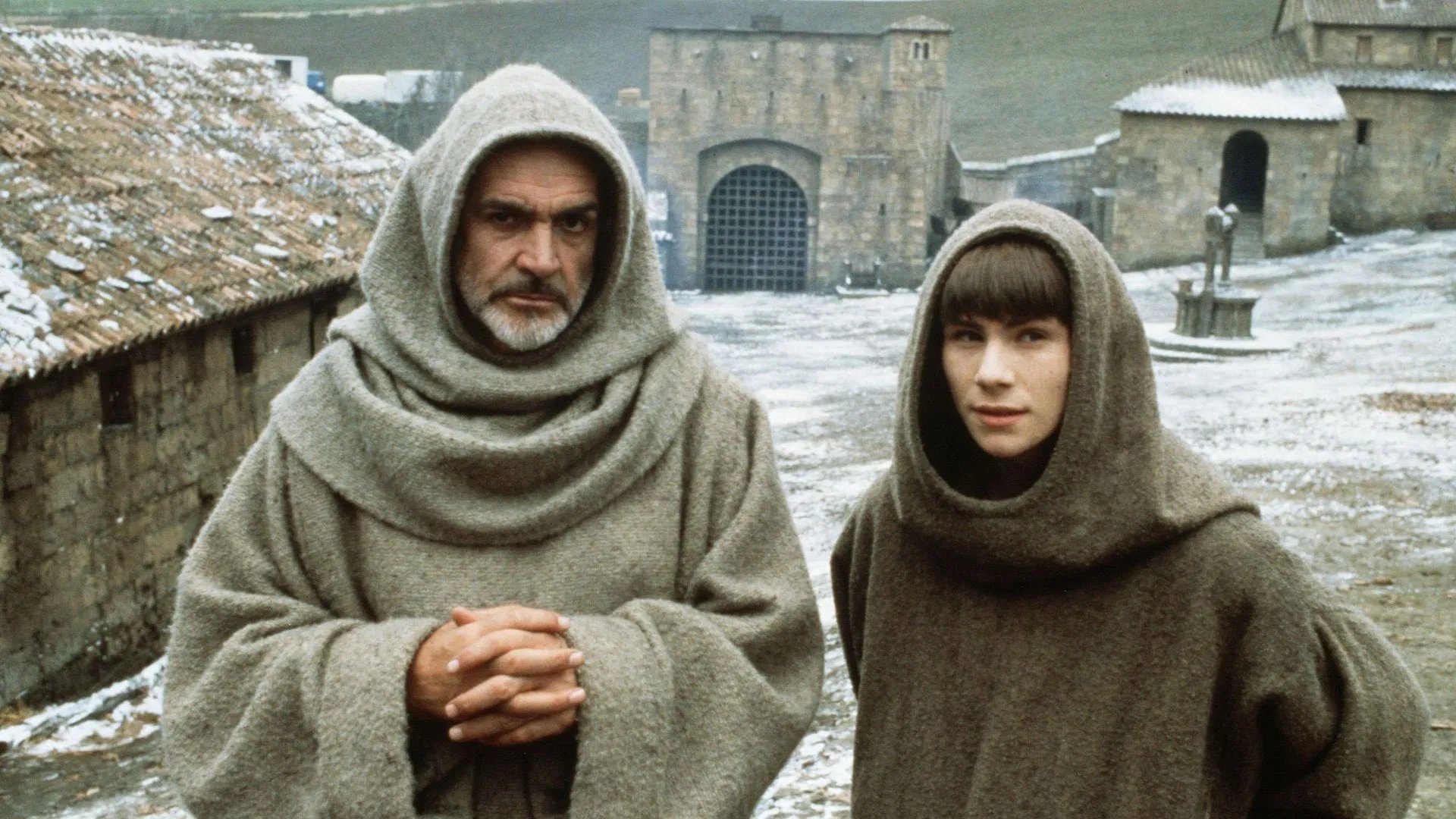
Jean-Jacques Annaud directs this adaptation of Umberto Eco's bestseller, turning it into a sort of medieval Sherlock Holmes, with Sean Connery in the lead role (his character's name, William of Baskerville, is a direct reference to Arthur Conan Doyle's detective) and young Christian Slater playing the part of Dr. Watson. While Eco's novel ended with the triumph of the Inquisition and the victory of darkness, the director and his screenwriters transformed the ending to celebrate the arrival of enlightenment.
Jean-Jacques Annaud
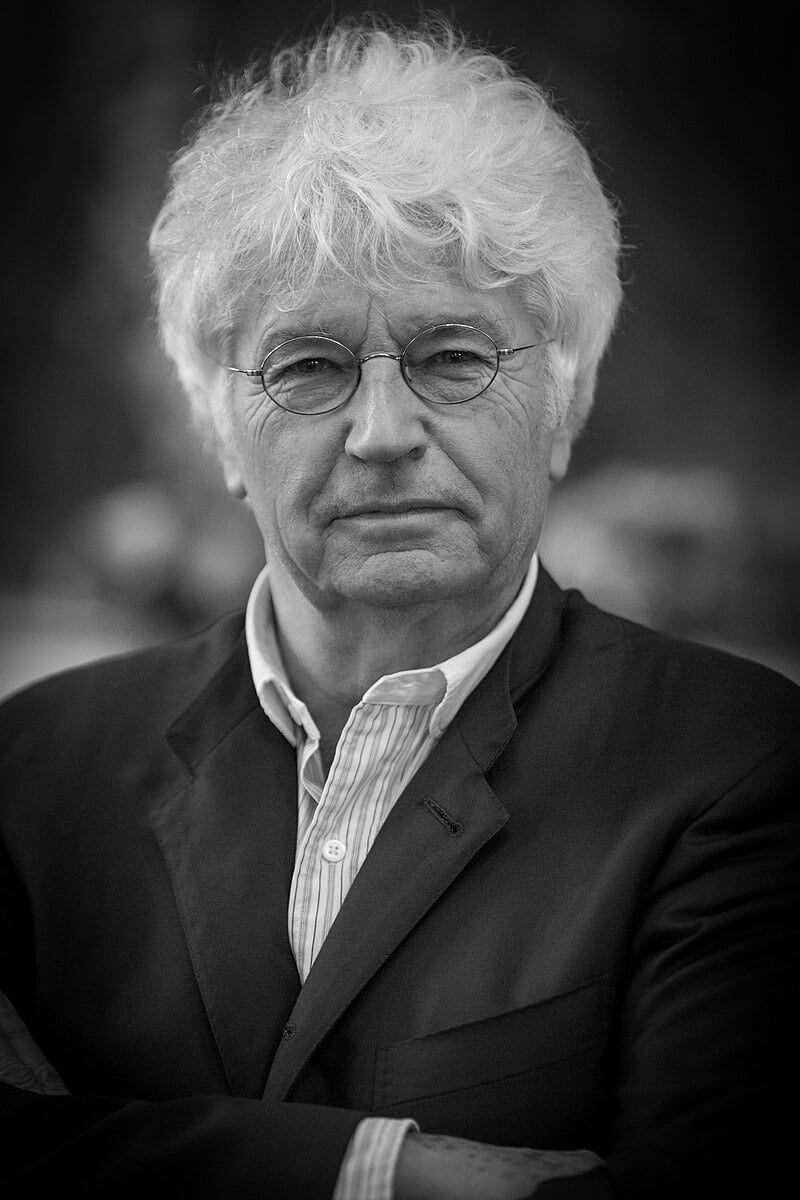
Jean-Jacques Annaud is a French film director, producer, and screenwriter. He started his career directing commercials for television and movie theatres. In 1973, one of his commercials, Crackers Belin, won the Palme d'or at Cannes’ International Advertising Festival. After meeting François Truffaut, who admired his mini-comedies and editing style, Truffaut put him in touch with producer Claude Berri. This led to Annaud directing his first feature film, Black and White in Color (1976). Despite being a commercial failure in France, the film won the Oscar for Best Foreign Language Film the following year and was subsequently re-released in France under the new title. Annaud then directed the film Hothead (1979), written by Francis Veber and starring Patrick Dewaere. He went on to tackle ambitious and expensive projects such as Quest for Fire (1981) and The Bear (1988), for which he received the César Award for Best Director. He also demonstrated a strong technical expertise by adapting Umberto Eco's The Name of the Rose (1986) and Marguerite Duras's The Lover (1992). Known for being a perfectionist, Annaud personally oversees every stage of his films' production. He enjoys visiting exotic, distant, and secret locations to offer audiences a sense of escapism that can only be found in cinema.