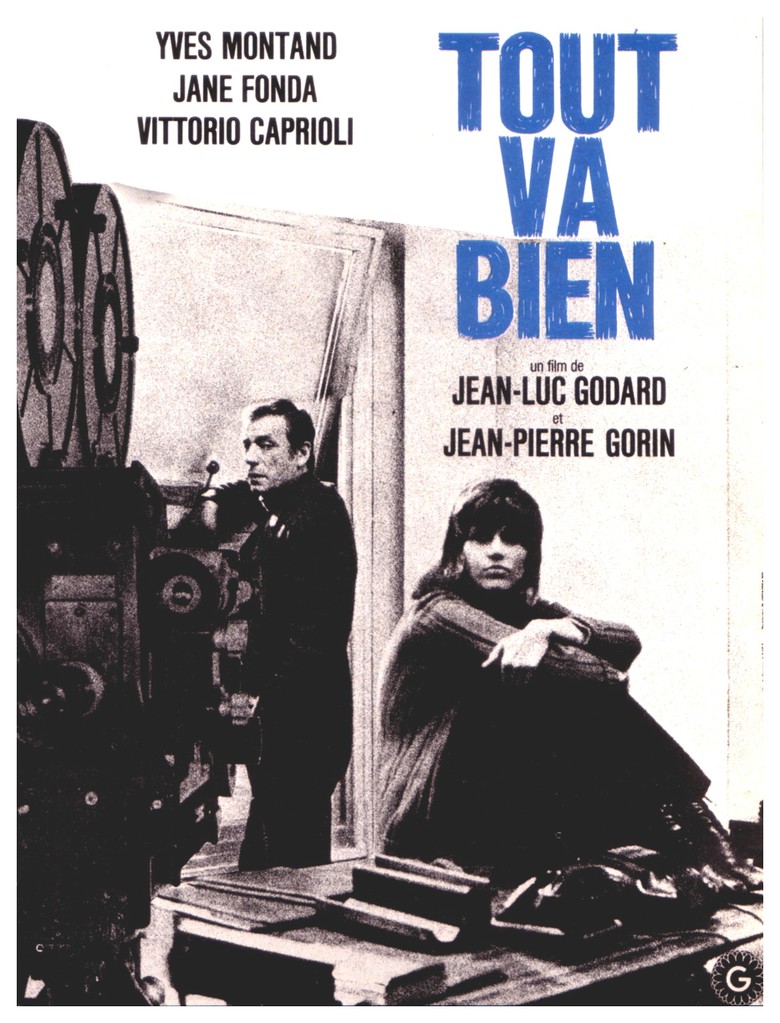
Tout va bien
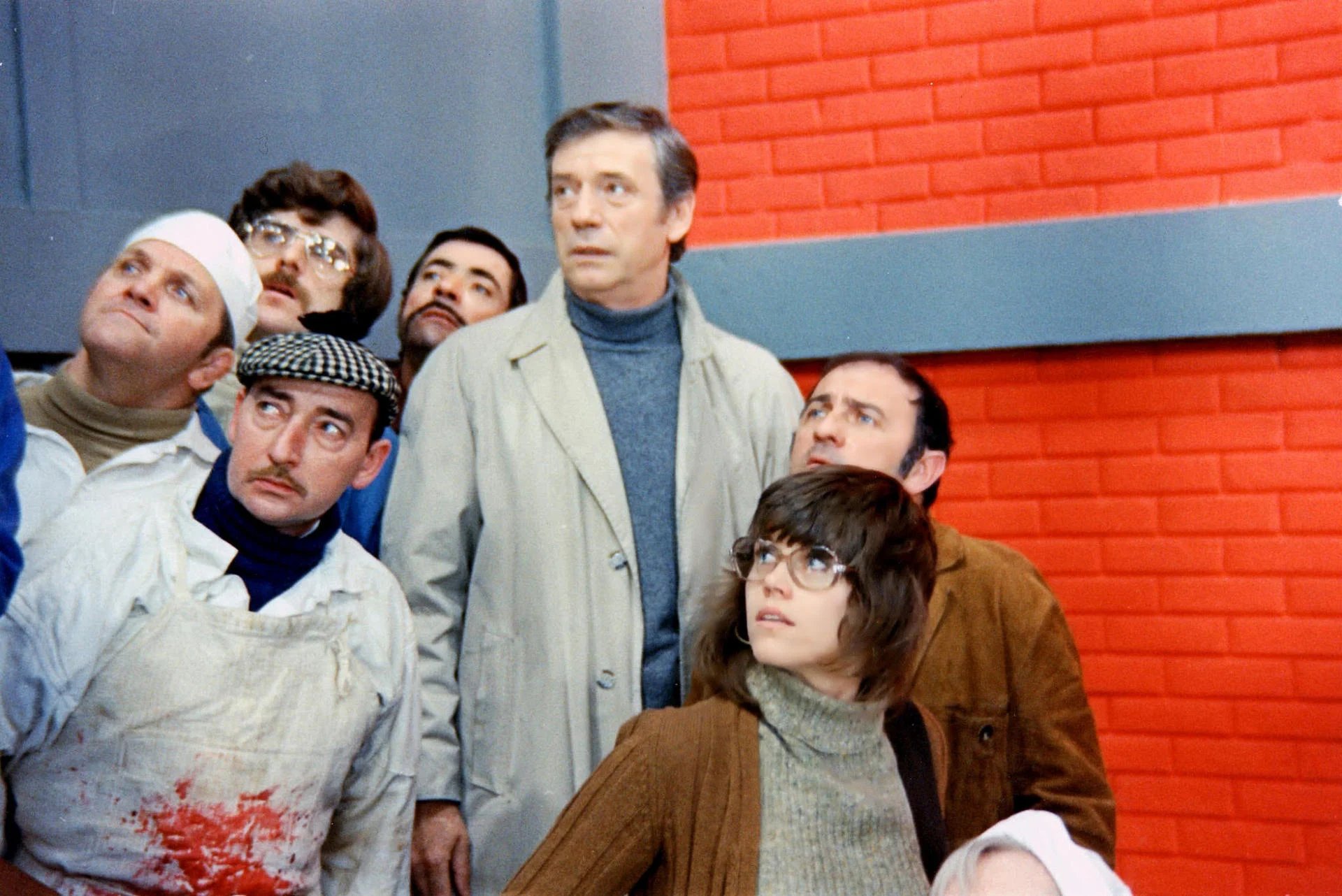
We are launching a recurring program dedicated to highlighting an actor or actress for a month. Jane Fonda combines star power with a comforting familiarity that has been with us for decades, both on and off screen, as she continues to be a leading activist to this day. Born into a family of actors, she has not rested on her laurels. Instead, she built a career all her own, demonstrating a unique talent that has effortlessly spanned different eras and resulted in an original and eclectic body of work, as evidenced by the selection of films in this series.
Tout va bien tells the story of a wildcat strike in a sausage factory witnessed by an American journalist and her husband, a has-been director of the New Wave. A masterpiece of radical cinema, Tout va bien is a caustic critique of society, marriage and revolution in post-1968 France.
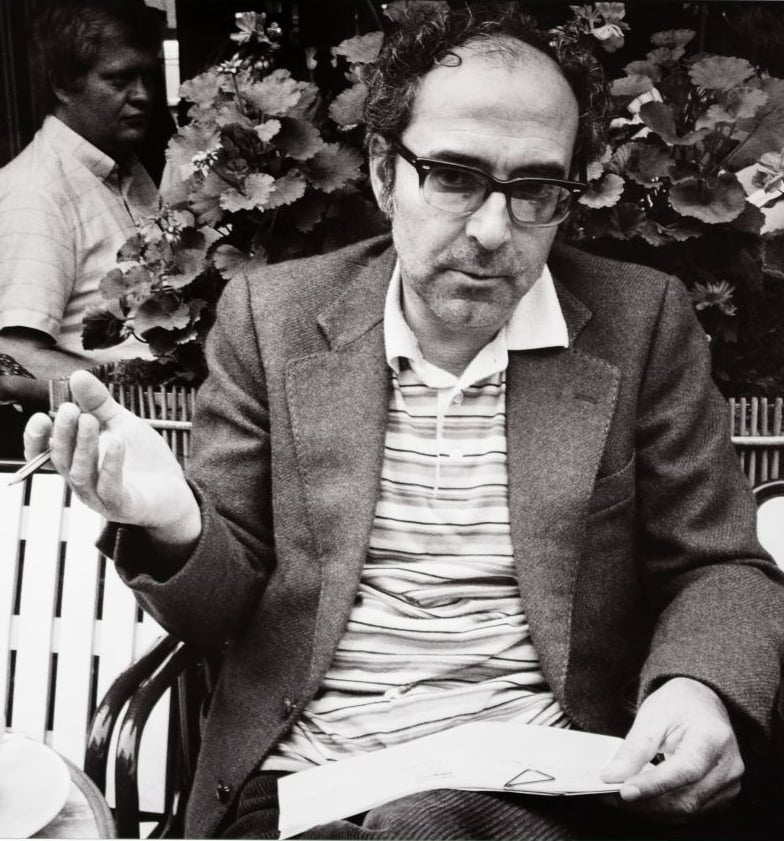
Jean-Luc Godard
Born in Paris in 1930, Jean-Luc Godard grew up on the shores of Lake Geneva, initially developing a passion for painting. After the Second World War, which he spent in Switzerland, his family sent him to study in Paris, but Godard mainly attended film clubs and the Cinémathèque française. In the early 1950s, he became involved with the Ciné-club du Quartier Latin where he met Maurice Schérer (soon to be Éric Rohmer), François Truffaut, Claude Chabrol and Jacques Rivette, among others, with whom he took his first steps as a critic and embarked on the adventure of the Cahiers du cinéma. After directing a few short films, he moved on to feature films in the wake of François Truffaut by directing Beathless (À bout de souffle) in 1960, a film that helped launch the French New Wave. He will not stop shooting until the 2010s, creating an exploratory body of work that has always pushed the boundaries of cinema.
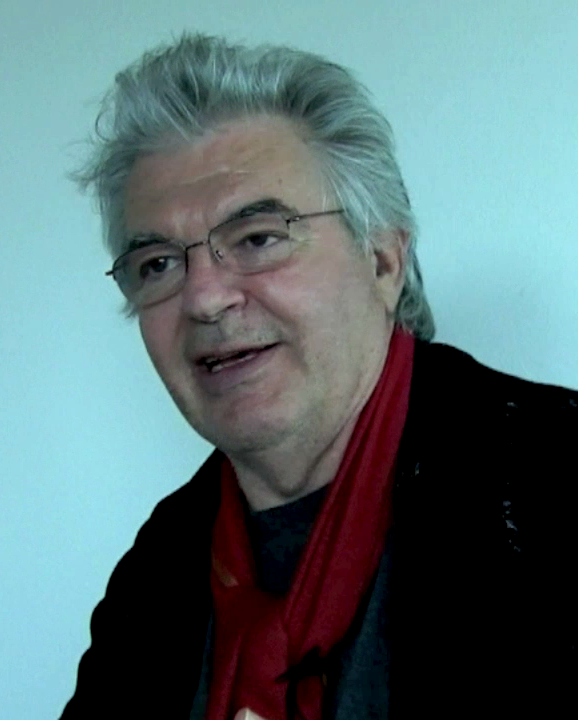
Photo: ©Bertrand Carrière | Collections de la Cinémathèque québécoise
Jean-Pierre Gorin
Jean-Pierre Gorin is a French filmmaker, best known for his work with Jean-Luc Godard, during what is often referred to as his "radical" period, as part of the Dziga Vertov Group. Together, they produced a series of overtly political films that includes Le vent d'est (1970), Tout va bien (1972), and Letter to Jane (1972). Gorin left France in the mid-1970s to accept a teaching position at the University of California. He remained on the Visual Arts faculty thereafter, teaching film history and film criticism. He continued to make films, most notably a "Southern California tetralogy" of essay films: Poto and Cabengo (1978), Routine Pleasures (1986), My Crasy Life (1991), and Letter to Peter (1992).