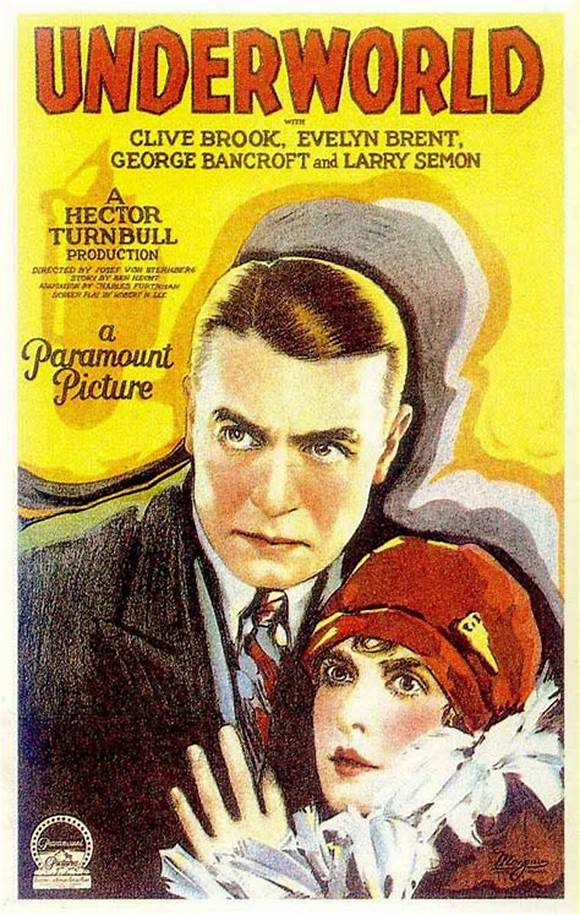
Underworld
Keeping silent cinema alive, by offering audiences a chance to rediscover films from the era with the accompaniment of talented pianists, is an essential component of the Cinémathèque's programming. As digital technology continues to invent new ways of creating images, it is more relevant than ever to remember how eloquent the images from the so-called silent era of film history truly were. It's fascinating to see how much these works and filmmakers contributed to modern cinema – not to mention that it is always a pleasure to return, for a few hours, to the era of images that speak for themselves.
Accompanied on piano by Chantale Morin
Chicago mob boss Bull Weed helps his former lawyer with his drinking problem. The lawyer falls in love with Lucy, the criminal's girlfriend, who has never loved Bull.
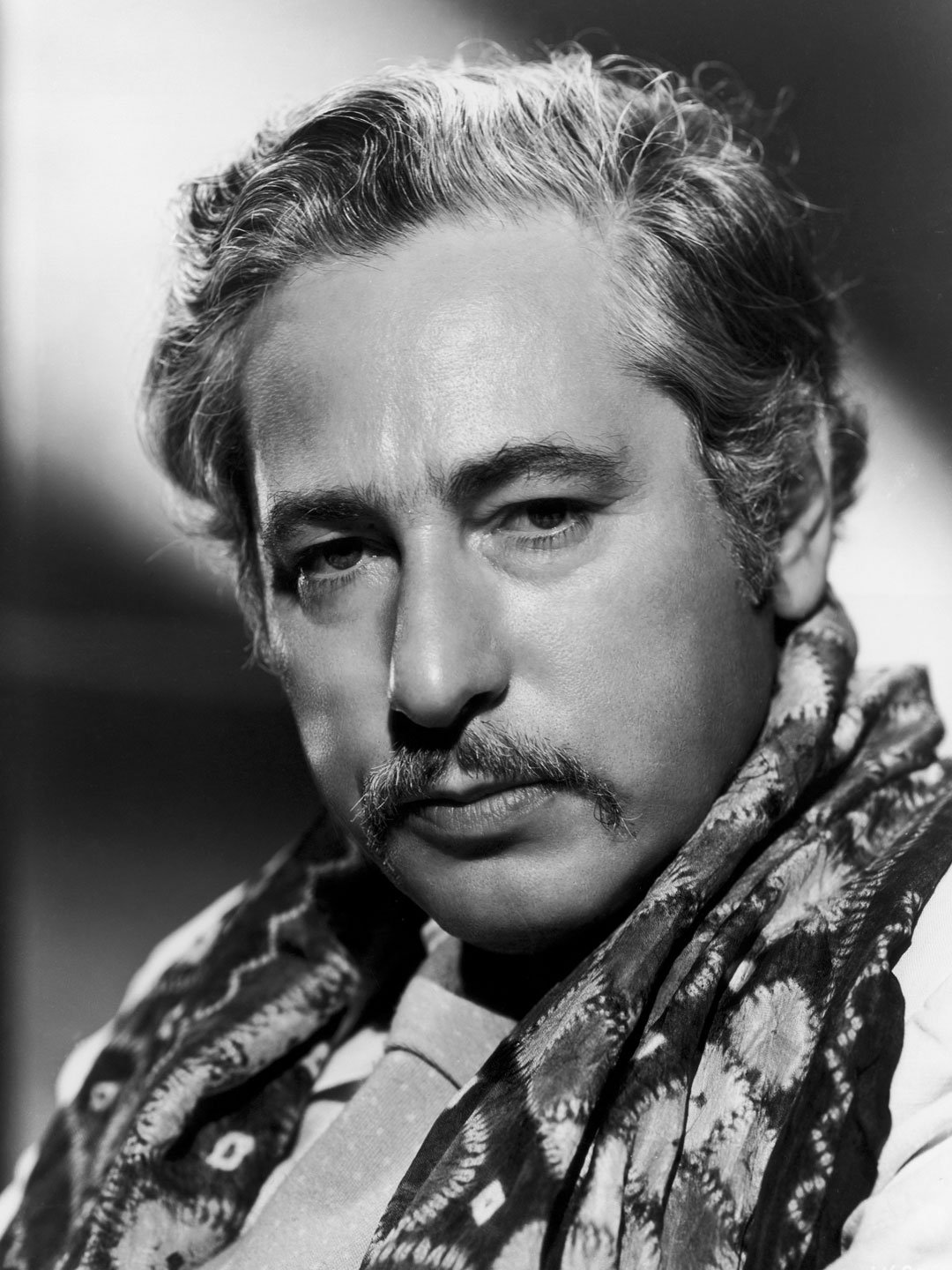
Josef von Sternberg
Josef von Sternberg was an Austrian-born filmmaker whose career successfully spanned the transition from the silent to the sound era, during which he worked with most of the major Hollywood studios. He is best known for his film collaboration with actress Marlene Dietrich in the 1930s, including the highly regarded Paramount/UFA production, The Blue Angel (1930). Sternberg's finest works are noteworthy for their striking pictorial compositions, dense décor, chiaroscuro illumination, and relentless camera motion, endowing the scenes with emotional intensity. He is also credited with having initiated the gangster film genre with his silent era movie Underworld (1927). Sternberg's themes typically offer the spectacle of an individual's desperate struggle to maintain their personal integrity as they sacrifice themselves for lust or love. He was nominated for the Academy Award for Best Director for Morocco (1930) and Shanghai Express (1932).