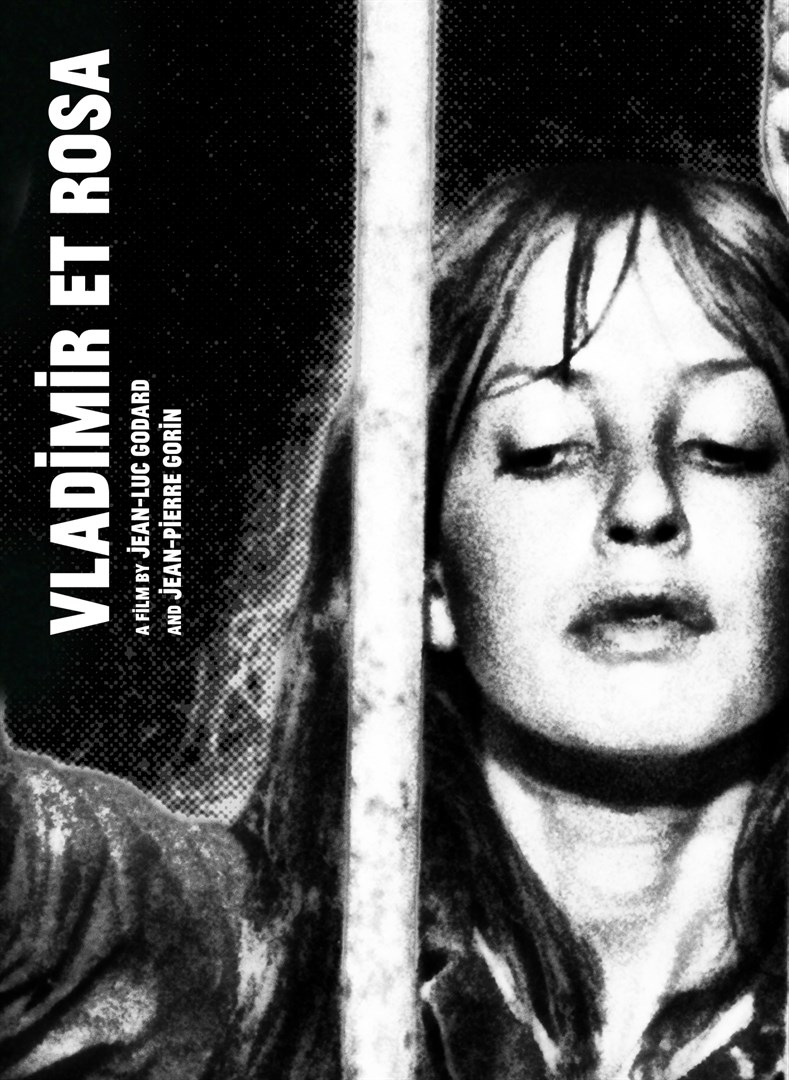
Vladimir and Rosa
From the end of the 1960s, Godard became both an actor and an observer of the turmoil of his time. He captures the pre-1968 tremors such as the decline of the Trente glorieuses years, the society of housing estates and traffic jams ... During this period, marked by his relationship with Anne Wiazemsky, he became increasingly political while maintaining an amused critical eye: thus, the Mao militants do not appreciate so much La Chinoise. From 1968 on, he became more radical and tried to make films in a different way: he tried his hand at pamphlet, kinetract, and antispectacular documentary, and claimed anonymity by founding the Dziga Vertov group with his Maoist friend Jean-Pierre Gorin. In the field, he mobilized for Henri Langlois, against the Vietnam War, for the Palestinian cause... The second half of the 1970s marked a new phase, when his meeting with Anne-Marie Miéville coincided with his transition to video.
Upon the completion of WEEKEND in 1967, Jean-Luc Godard shifted gears to embark on engaging more directly with the radical political movements of the era -- and thus creating a new kind of film, or, as he eventually put it: “new ideas distributed in a new way.” This method involved collaborating with the precocious young critic and journalist, Jean-Pierre Gorin. Both as a two-person unit, and as part of the loose collective known as the Groupe Dziga Vertov (named after the early 20th-century Russian filmmaker / theoretician), Godard and Gorin would realize “some political possibilities for the practice of cinema” and craft new frameworks for investigating the relationships between image and sound, spectator and subject, cinema and society.
These films, long out-of-circulation except in film dupes and bootleg video, here make their formal repertory theatrical debut. They provide a crucial glimpse of Godard’s radicalization, and of the aesthetic dialogue between him and Gorin that, in essence, invented a modern militant cinema. As Godard told an English journalist of the era, film is not a gun -- but “a light which helps you check your gun.”
VLADIMIR AND ROSA: A searing, satirical comic-reportage on the trial of the Chicago Eight, featuring Juliet Berto and Godard + Gorin themselves. (AGFA)
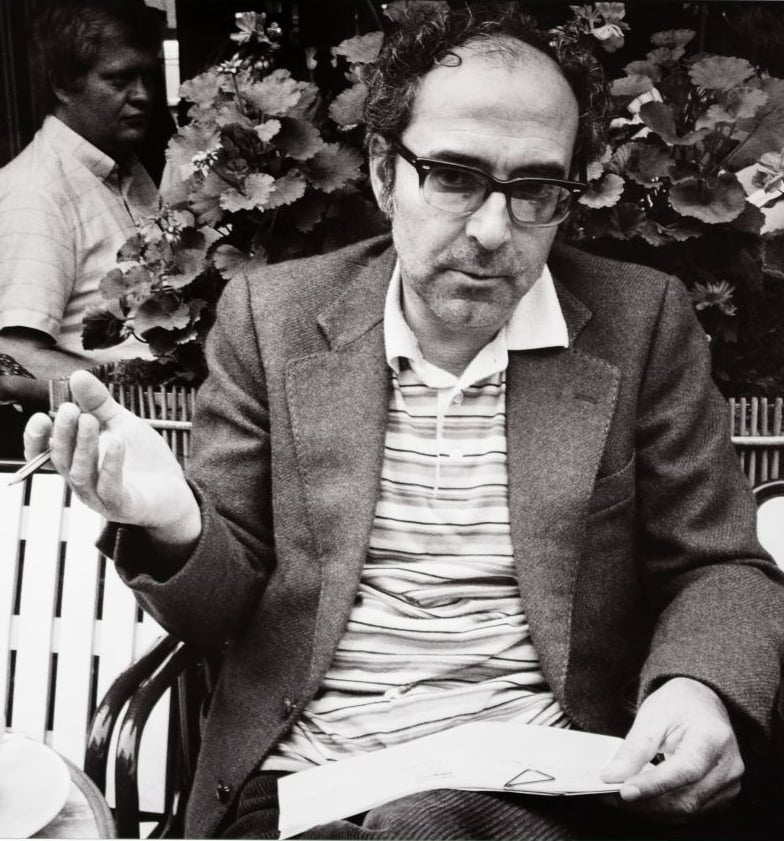
Jean-Luc Godard
Born in Paris in 1930, Jean-Luc Godard grew up on the shores of Lake Geneva, initially developing a passion for painting. After the Second World War, which he spent in Switzerland, his family sent him to study in Paris, but Godard mainly attended film clubs and the Cinémathèque française. In the early 1950s, he became involved with the Ciné-club du Quartier Latin where he met Maurice Schérer (soon to be Éric Rohmer), François Truffaut, Claude Chabrol and Jacques Rivette, among others, with whom he took his first steps as a critic and embarked on the adventure of the Cahiers du cinéma. After directing a few short films, he moved on to feature films in the wake of François Truffaut by directing Beathless (À bout de souffle) in 1960, a film that helped launch the French New Wave. He will not stop shooting until the 2010s, creating an exploratory body of work that has always pushed the boundaries of cinema.
Photo: ©Bertrand Carrière | Collections de la Cinémathèque québécoise
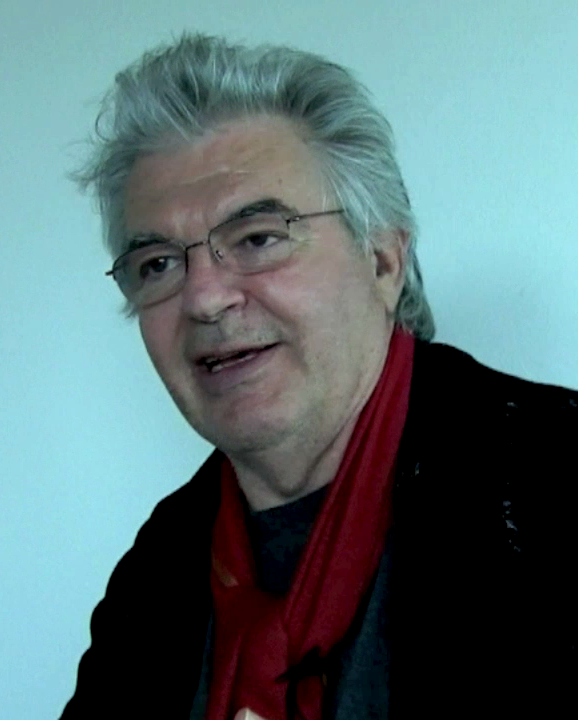
Jean-Pierre Gorin
Jean-Pierre Gorin is a French filmmaker, best known for his work with Jean-Luc Godard, during what is often referred to as his "radical" period, as part of the Dziga Vertov Group. Together, they produced a series of overtly political films that includes Le vent d'est (1970), Tout va bien (1972), and Letter to Jane (1972). Gorin left France in the mid-1970s to accept a teaching position at the University of California. He remained on the Visual Arts faculty thereafter, teaching film history and film criticism. He continued to make films, most notably a "Southern California tetralogy" of essay films: Poto and Cabengo (1978), Routine Pleasures (1986), My Crasy Life (1991), and Letter to Peter (1992).