Heaven Can Wait

Giants, fairies, magicians, ghosts, dragons, and monsters of all kinds… Here’s what your Cinémathèque has in store this summer! Since Méliès, filmmakers have embraced the fanstastic potential of cinema, creating infinite phantasmagorias and extraordinary spectacles where the unreal becomes real. Step into a world of fantasy and boundless imagination: whatever your generation, the monsters and wonders that once filled your childhood dreams are back this summer 2025!
35 mm print loaned by the Cineclub Film Society
Recently deceased Henry Van Cleve turns up at the gates of hell, where he is met by a kind but overworked Satan. Faced with the latter's hesitations and doubts about Van Cleve's qualifications, the man has no choice but to recount his dissolute life to prove that he belongs in the infernal abyss. For the only time in his career, Ernst Lubitsch shoots a film in color: the experiment is a success, as the splendor and sophistication of James Basevi's sets are enhanced by Edward Cronjager's photography.
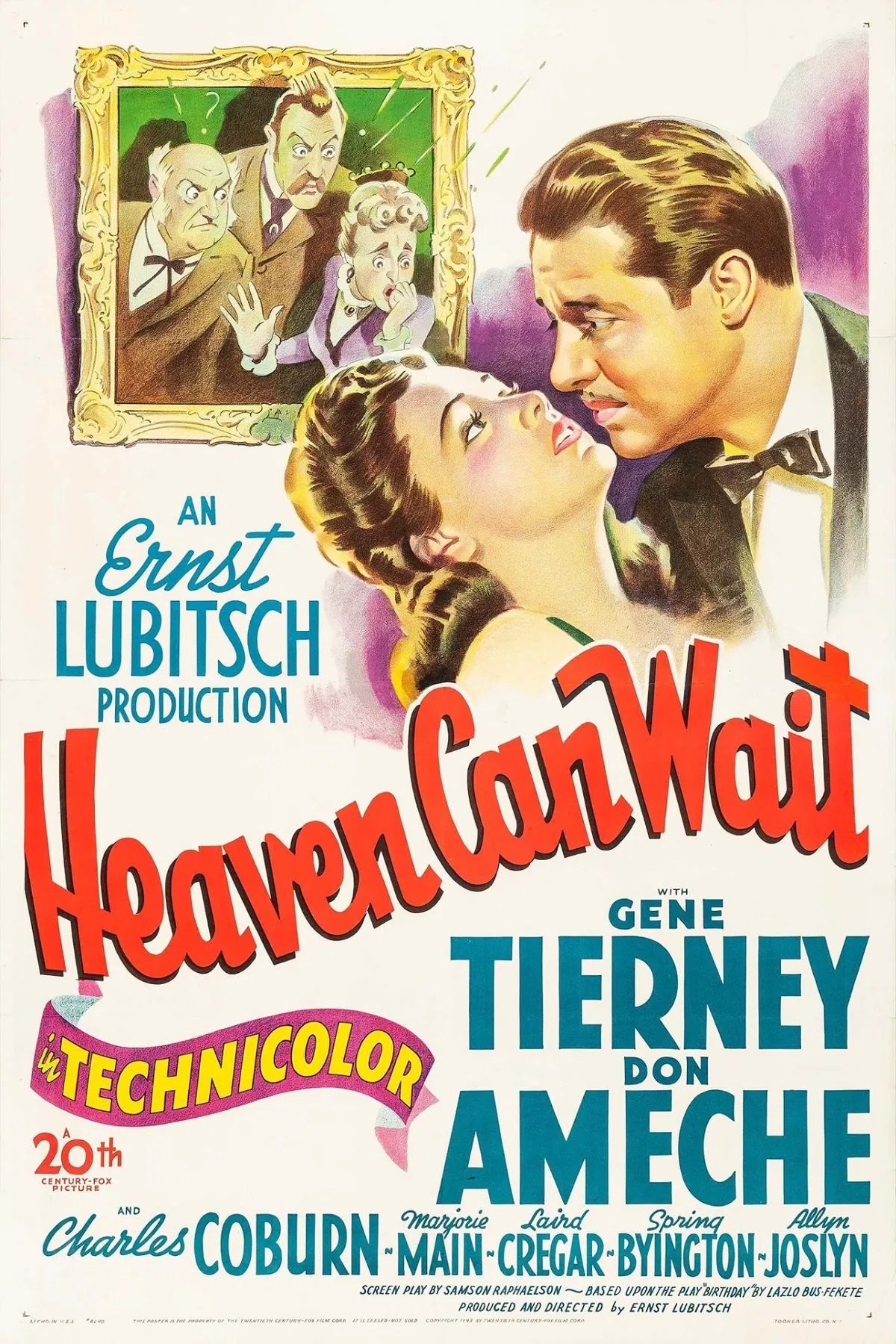
Ernst Lubitsch
Ernst Lubitsch was a German-born American film director who began his career as an actor. A prolific director, he made over fifty films in thirty years and left a mark on cinema history with his comedies, including Design for Living (1933), Ninotchka (1939), The Shop Around the Corner (1940), To Be or Not to Be (1942), and Heaven Can Wait (1943). Renowned for his mastery of ellipsis, anticipation, and surprise, Lubitsch stood apart from the expressionism of German cinema and the conventions of silent films. The celebrated Lubitsch Touch is defined by its elegant emotional restraint, creating a unique cinematic style where nothing feels overstated. It reflects an art of living, shaping the interactions between characters, as well as between the film and its audience. It also embodies his Jewish humor, offering a graceful resistance to the absurdities of human foolishness.