Cinema, powerful machine of the 20th century
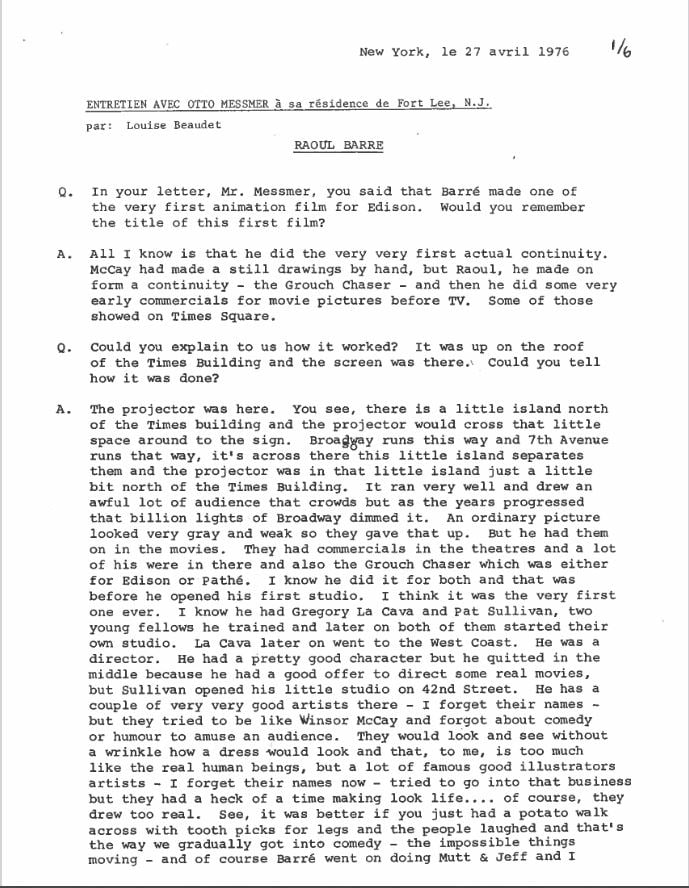
The industrialization of animation, based on the division of plotting and shooting work among members of a team supervised by a director and producer, began in New York in the 1910s. Raoul Barré opened his studio in 1914 in the Bronx, in this fiercely competitive environment. He hired young draftsmen and artists, teaching them the rudiments of animation and refining their artistic sense by organizing live-model sessions for them.
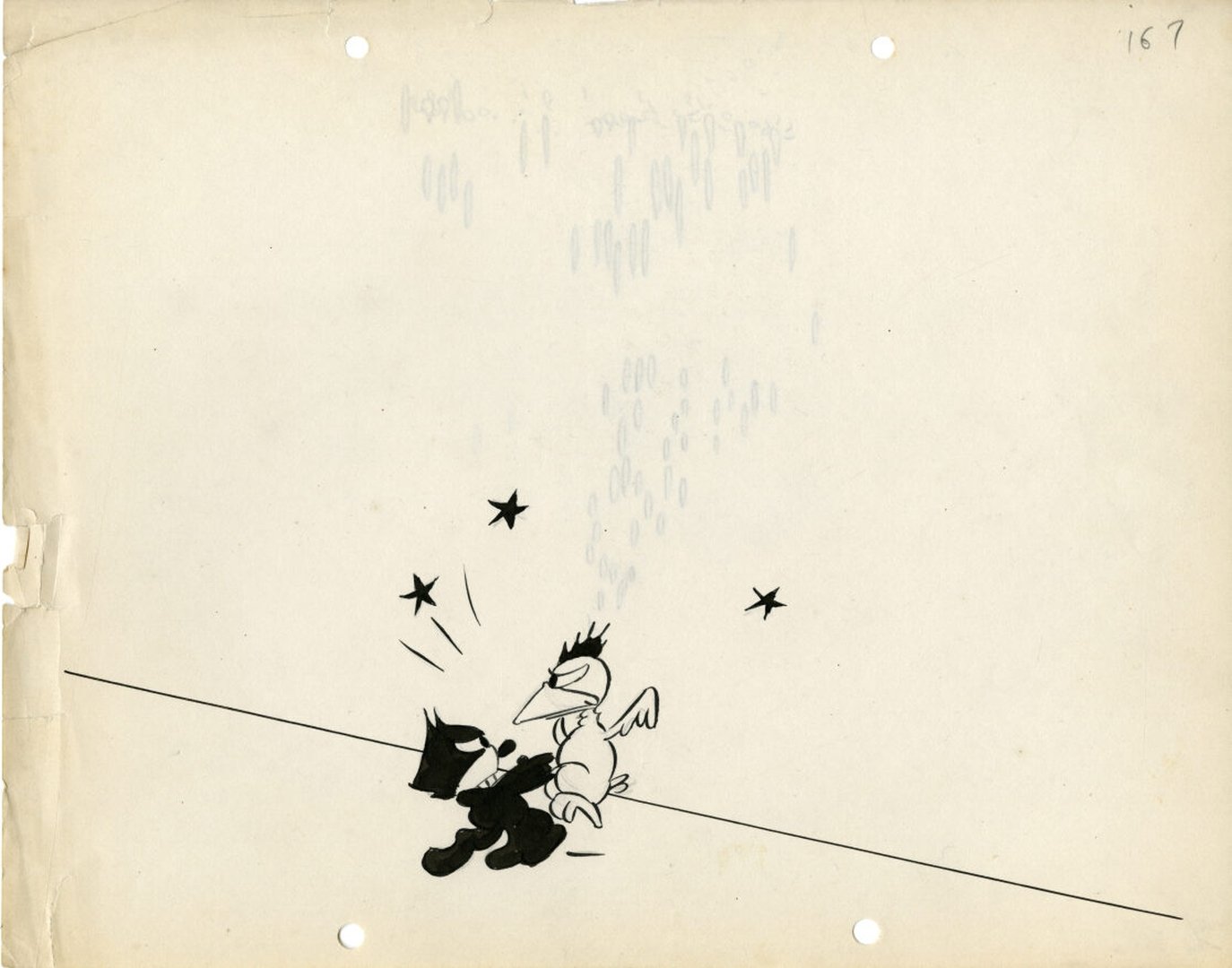
Image from the film Felix Trumps the Ace. Coll. Cinémathèque québécoise : 1993.0133.AN.14
He directed and produced two fantasy series: the Animated Grouch Chasers and the Phables. The former consists of animated sketches integrated with live action, while the latter is an adaptation of a Tom E. Powers comic strip. Powers' comic strip, which takes an ironic look at contemporary mores. The stripped-down style of his cartoons recalls the Caran d'Ache drawings of the 1890s.
In 1916, he teamed up with Charley Bowers to shoot Mutt & Jeff at the Barré-Boxers Studio, until they fell out. Barré left the city for the New York countryside, where he took up painting again, spent time in Montreal and Paris, and returned to New York in 1926, joining the team of Pat Sullivan, producer of Felix the Cat, where he collaborated on seven episodes of the series.
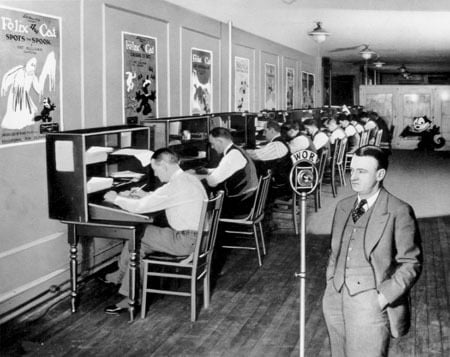
Photo-montage of Pat Sullivan's studio, producer of the Felix the Cat animated series.
On the left : Otto Mesmer (Director). Raoul Barré appears two seats away.
Coll. Cinémathèque québécoise : 2003.0473.PH
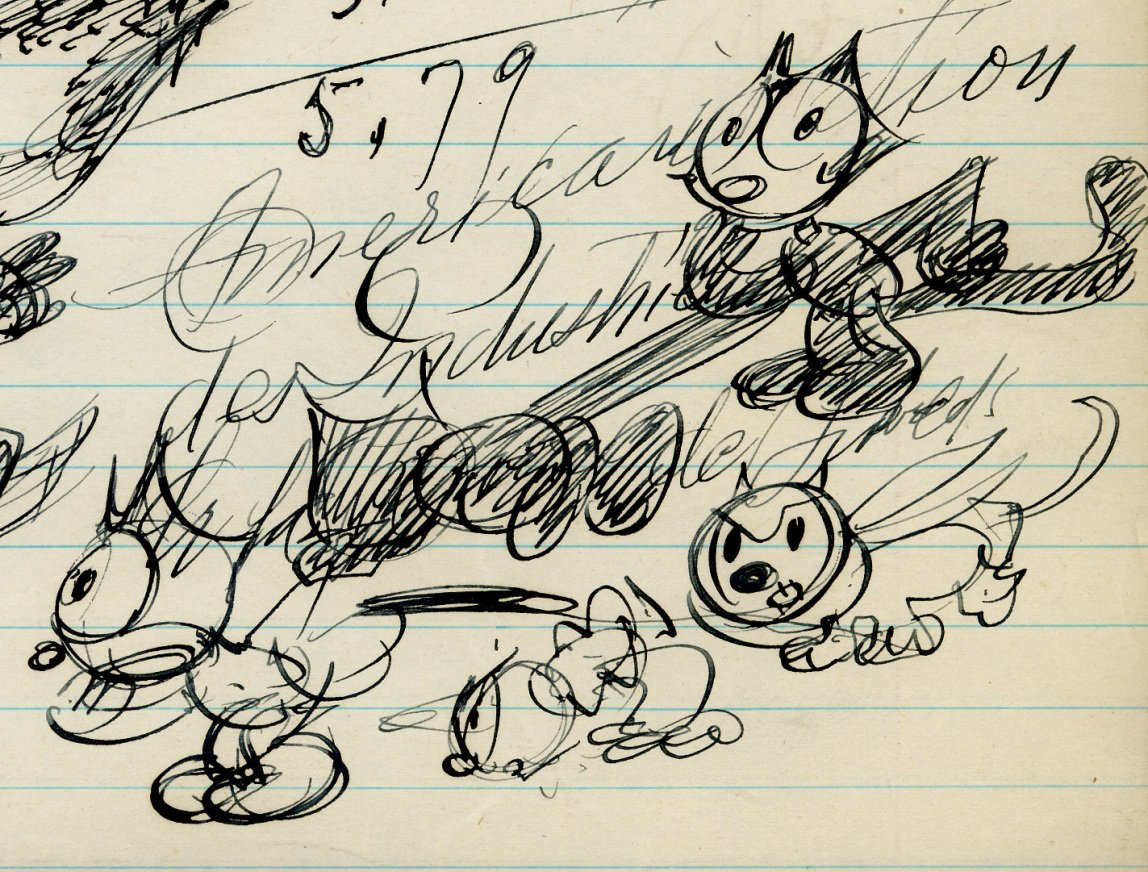
Sketch of Felix The Cat, drawn by Raoul Barré.
Coll. Cinémathèque québécoise.
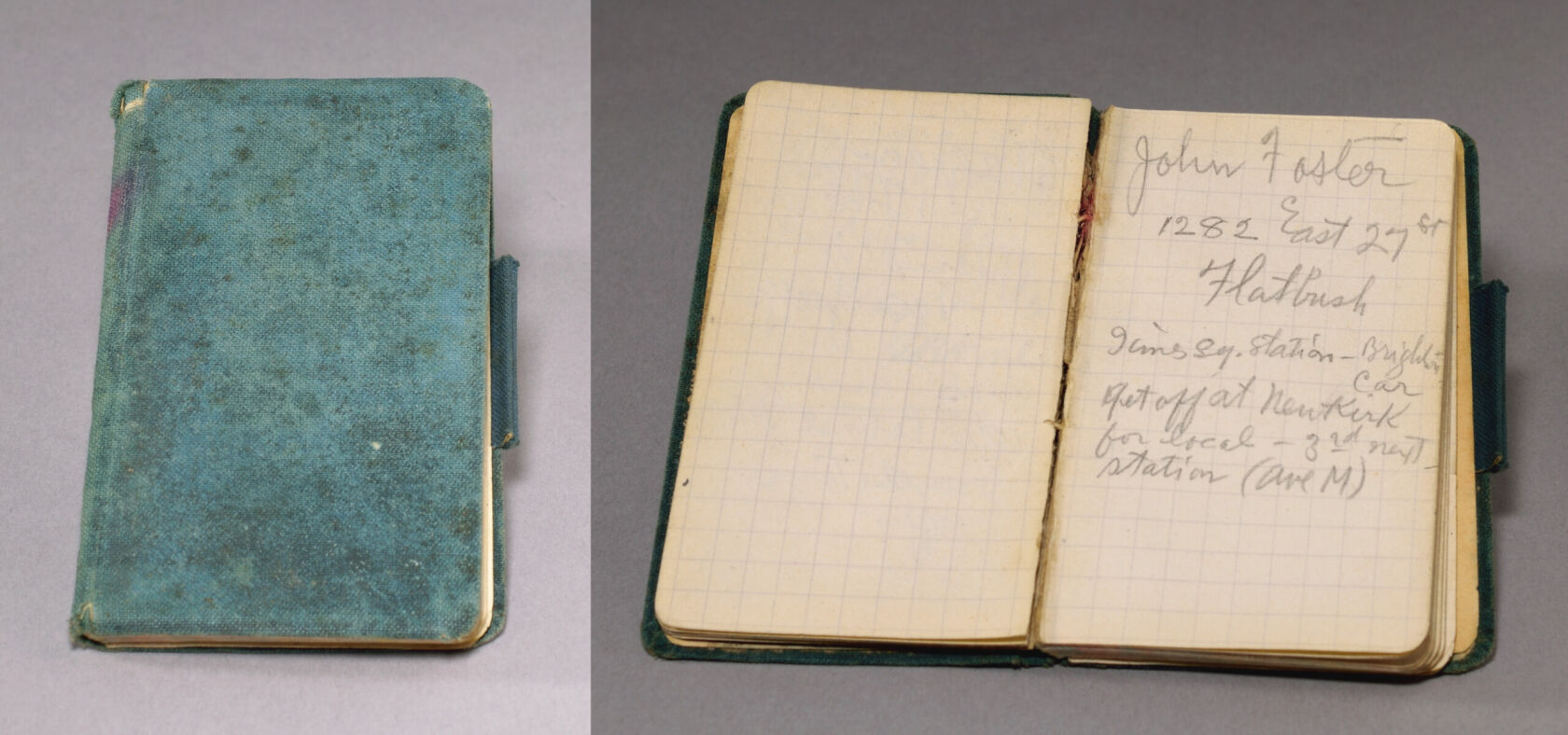
Raoul Barré's personal notebook, no date. Coll. Cinémathèque québécoise : 2005.0549.07.AR
One of the notebooks in our collection contains a number of addresses written down by Raoul Barré himself, possibly around 1921 and 1922. It includes the address of a restaurant in France, Le Chapon fin, followed by a comment that Barré enjoyed the red wine there. More interesting is the profile of the individuals whose contact details Barré notes: they are mostly personalities working in animation and illustration in New York, Paris, London and Montreal. Was he looking for work? Did he have a film project in mind? Did he visit all these people? The notebook doesn't give any answers. However, it does include the address of Pat Sullivan, for whom Raoul Barré would work a few years later.
Raoul Barré's fundamental contribution to animation lies in his two inventions, which simplify and speed up the animator's work while improving the quality of movement. The slash system is a pre-celluloid process that involves cutting an opening in the scenery sheet and placing it over the elements to be animated. Despite its effectiveness, the slash system quickly fell into disuse as soon as the cel was invented in 1914, but the second invention represented a veritable revolution. Barré came up with the idea of a ruler to which he attached two lugs. Drawing sheets, perforated at the top or bottom, are immobilized on the peg bar. Combined with the slash system, this invention stabilized the succession of images and enabled more detailed decoration.
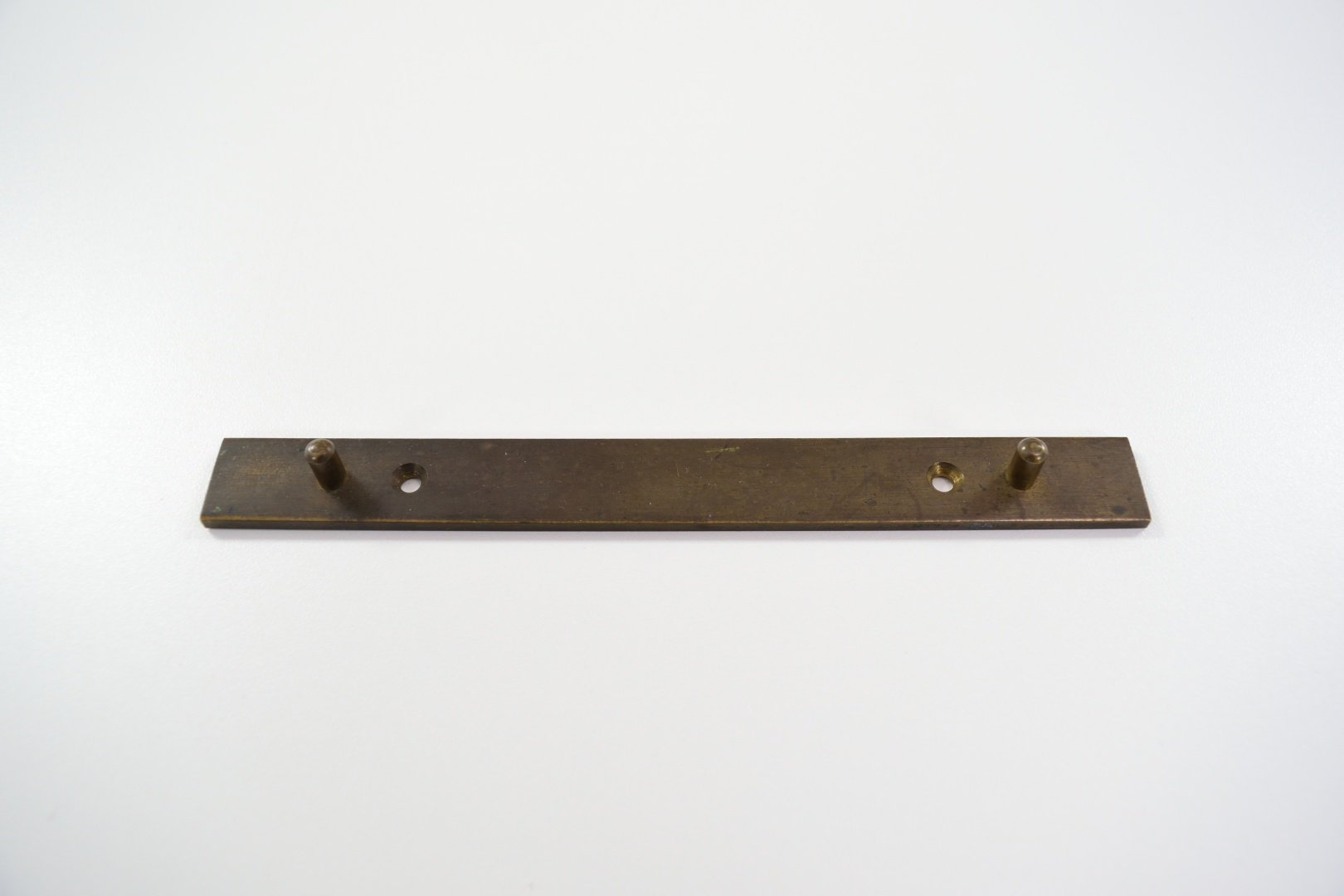
Animation Pegbar. Invented by Raoul Barré. Coll. Cinémathèque québécoise : 2005.0026.OB.02